Photography: Kichun Park
Photography: Kichun Park
Photography: Kichun Park
Photography: Kichun Park
Photography: Kichun Park
Photography: Kichun Park
Photography: Kichun Park
Photography: Kichun Park
Photography: Kichun Park

Photography: Kichun Park
(De-)vision Division
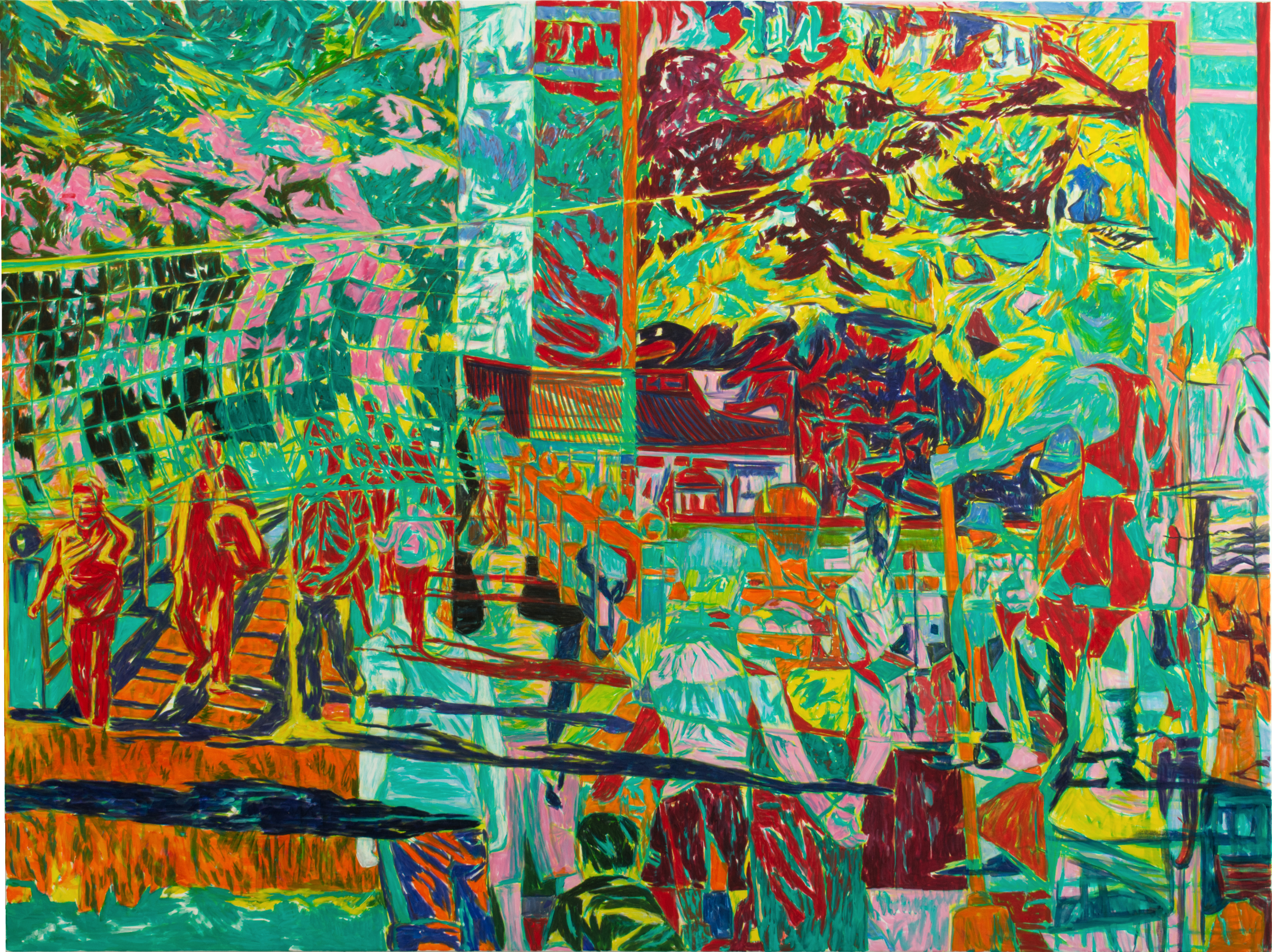
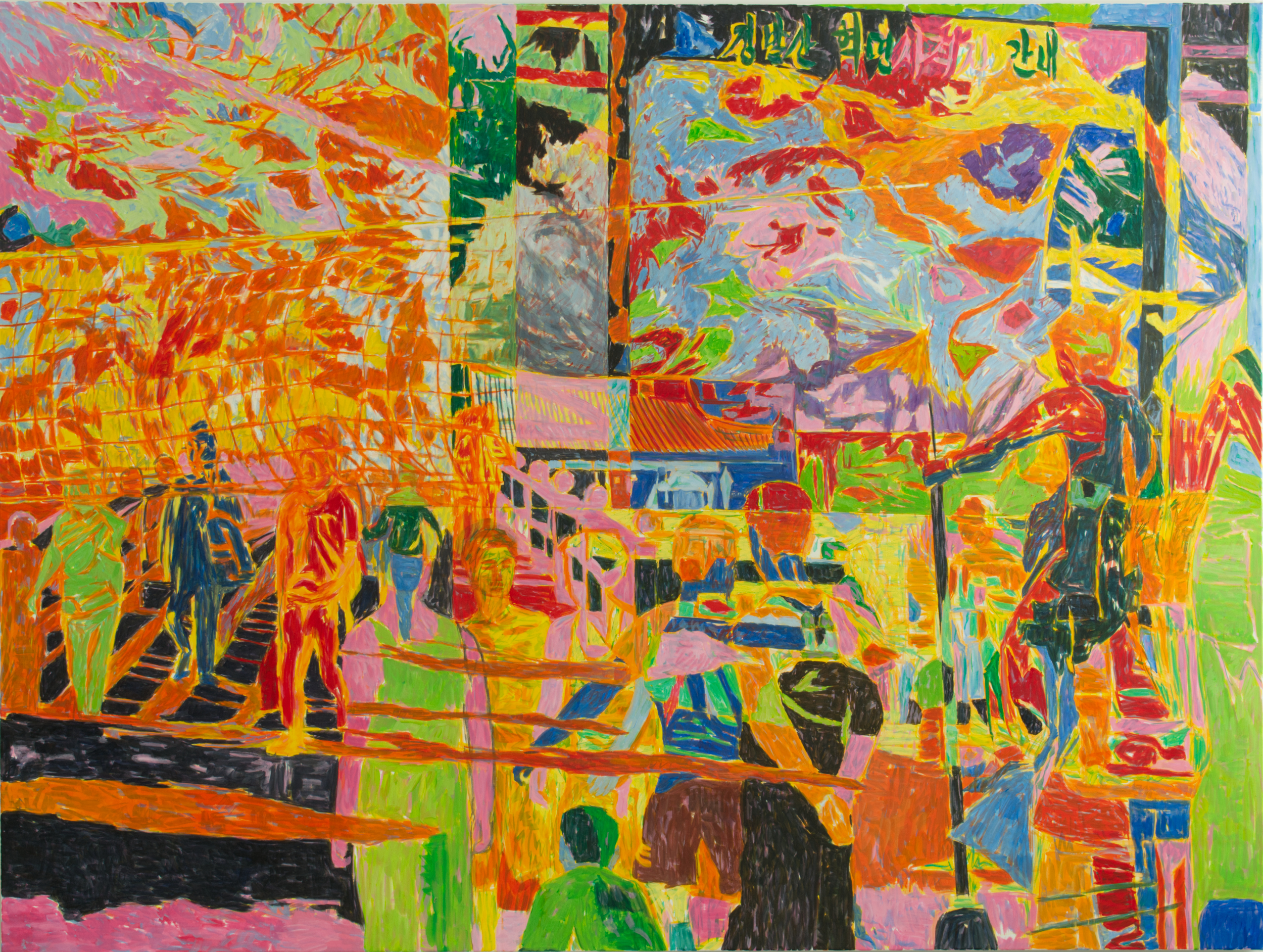
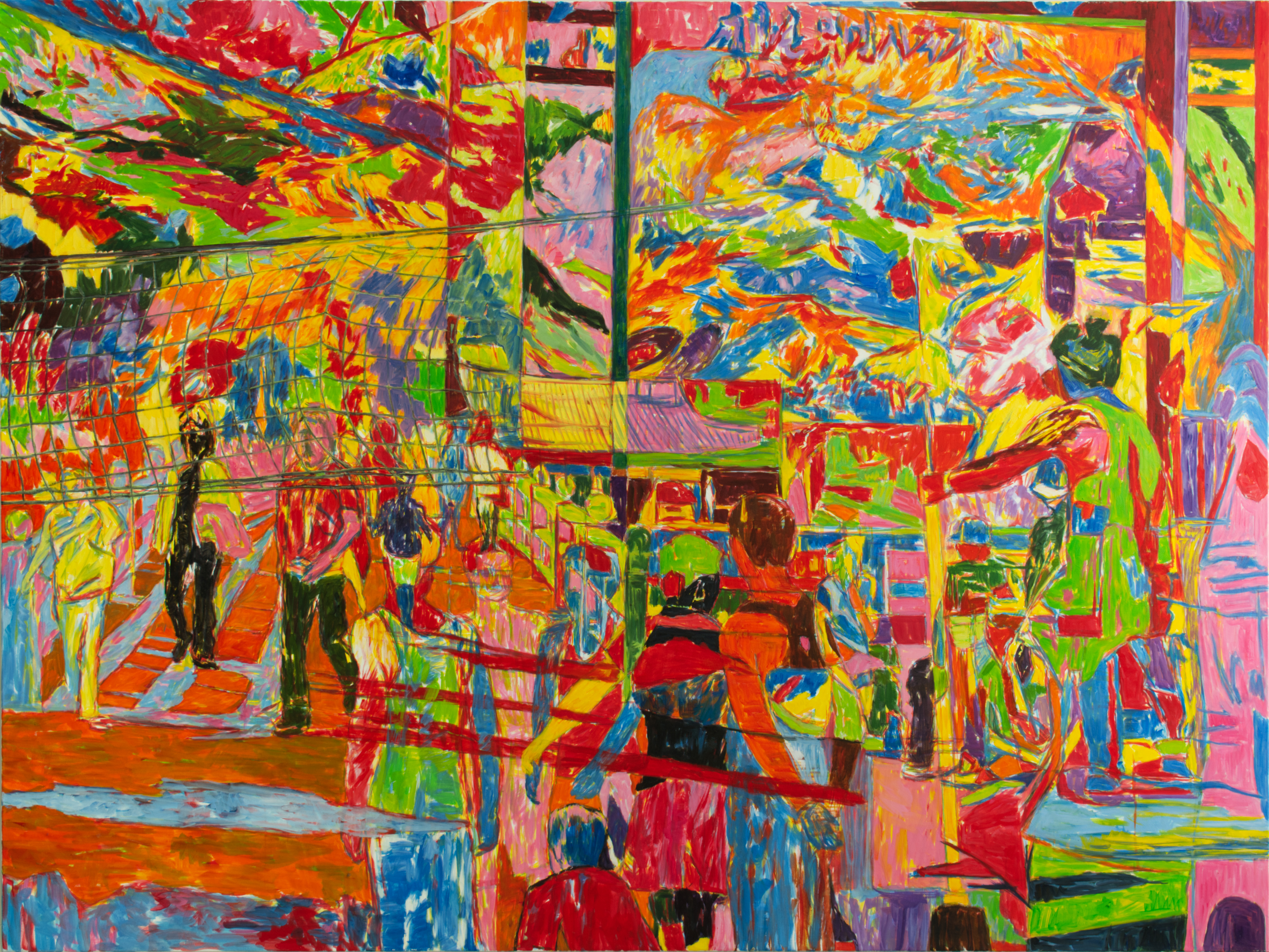
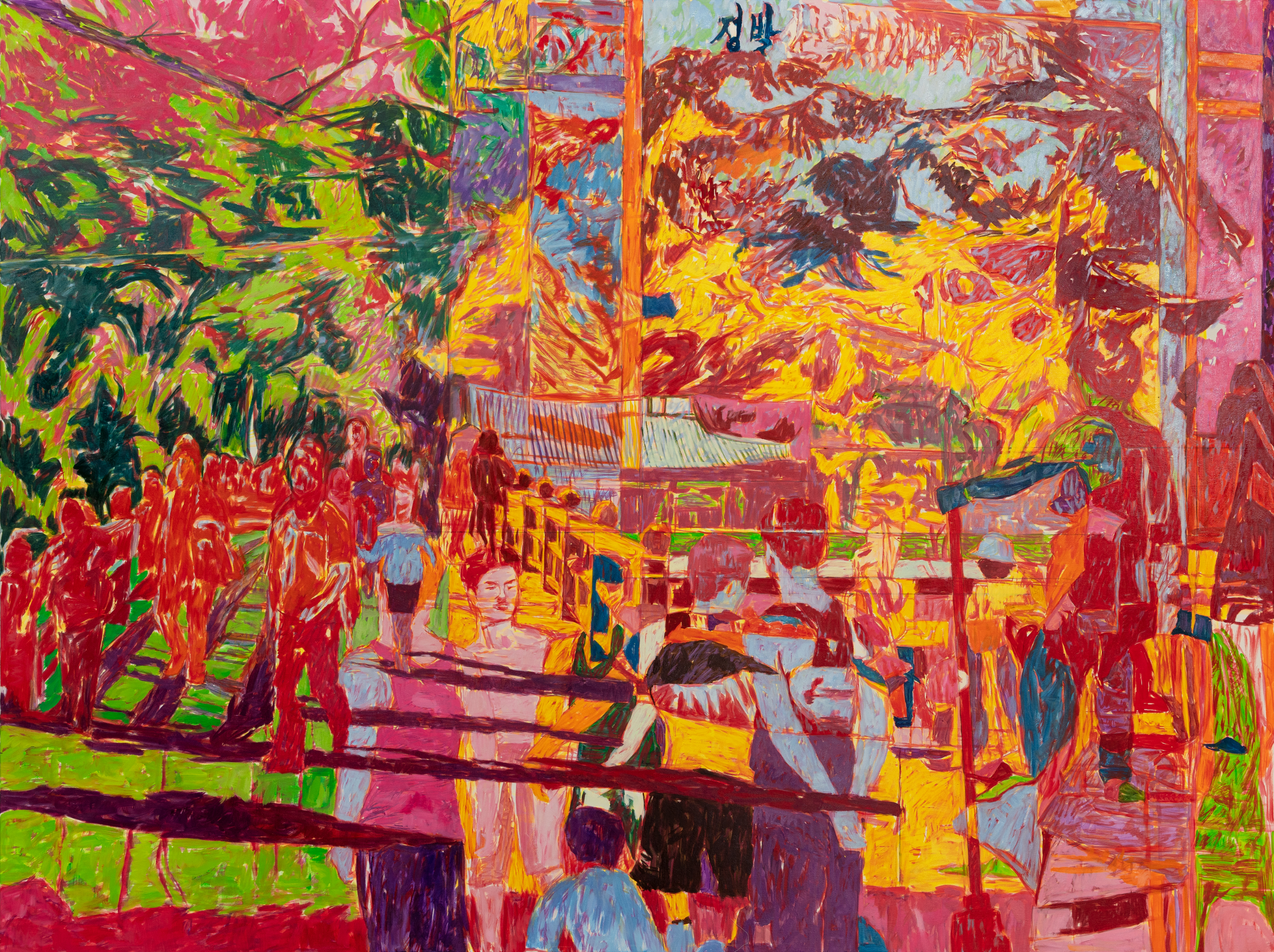
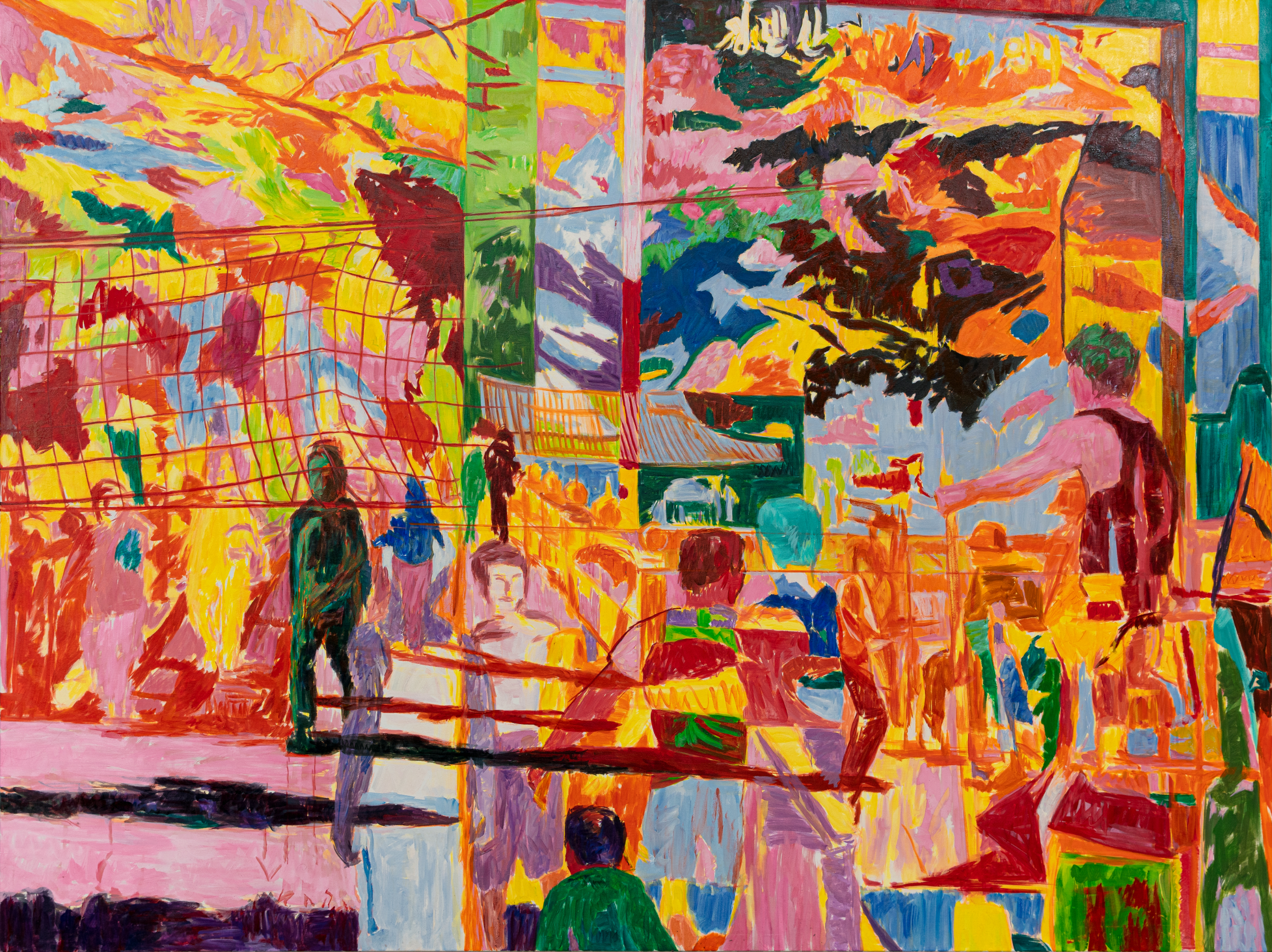
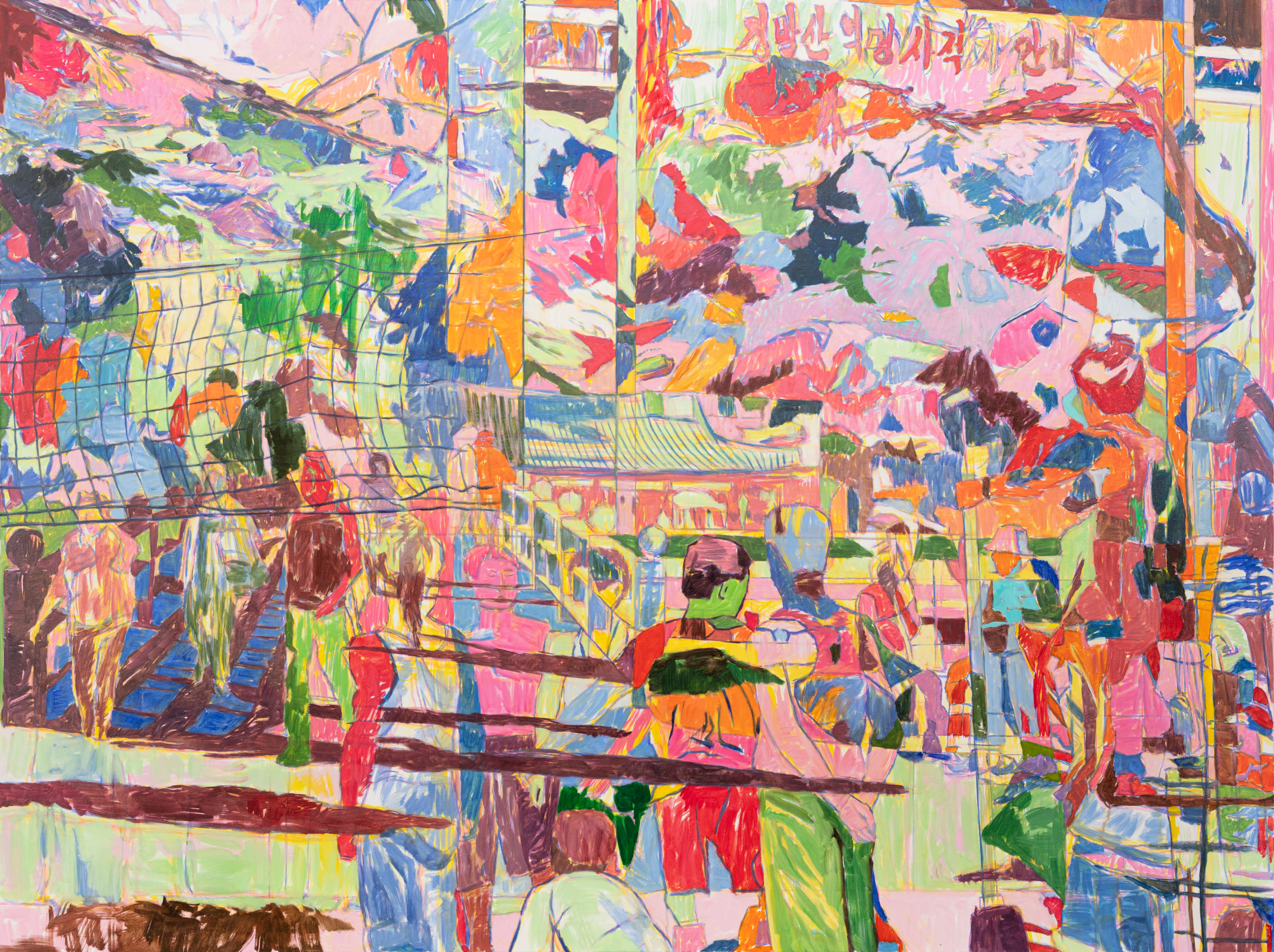
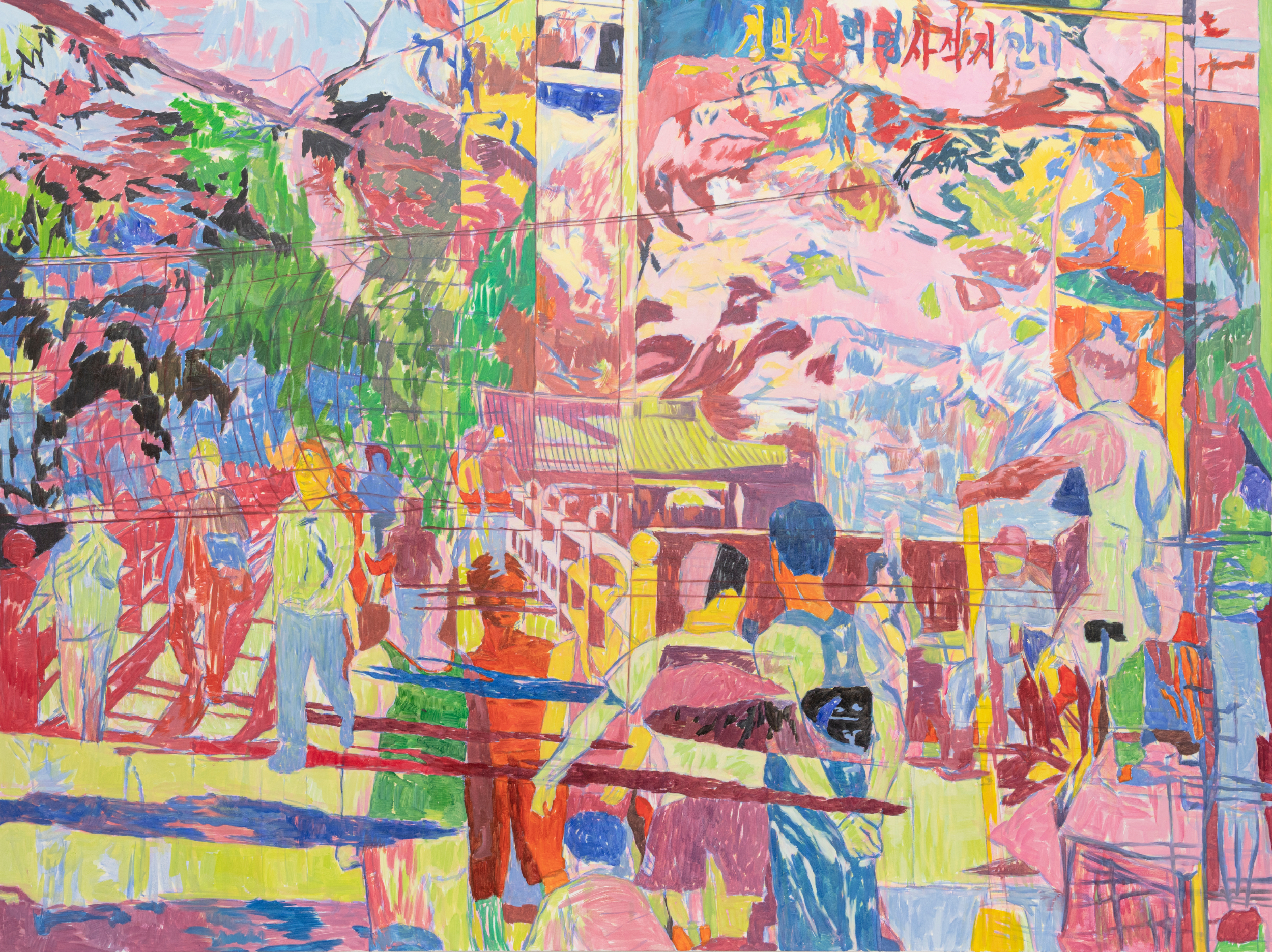
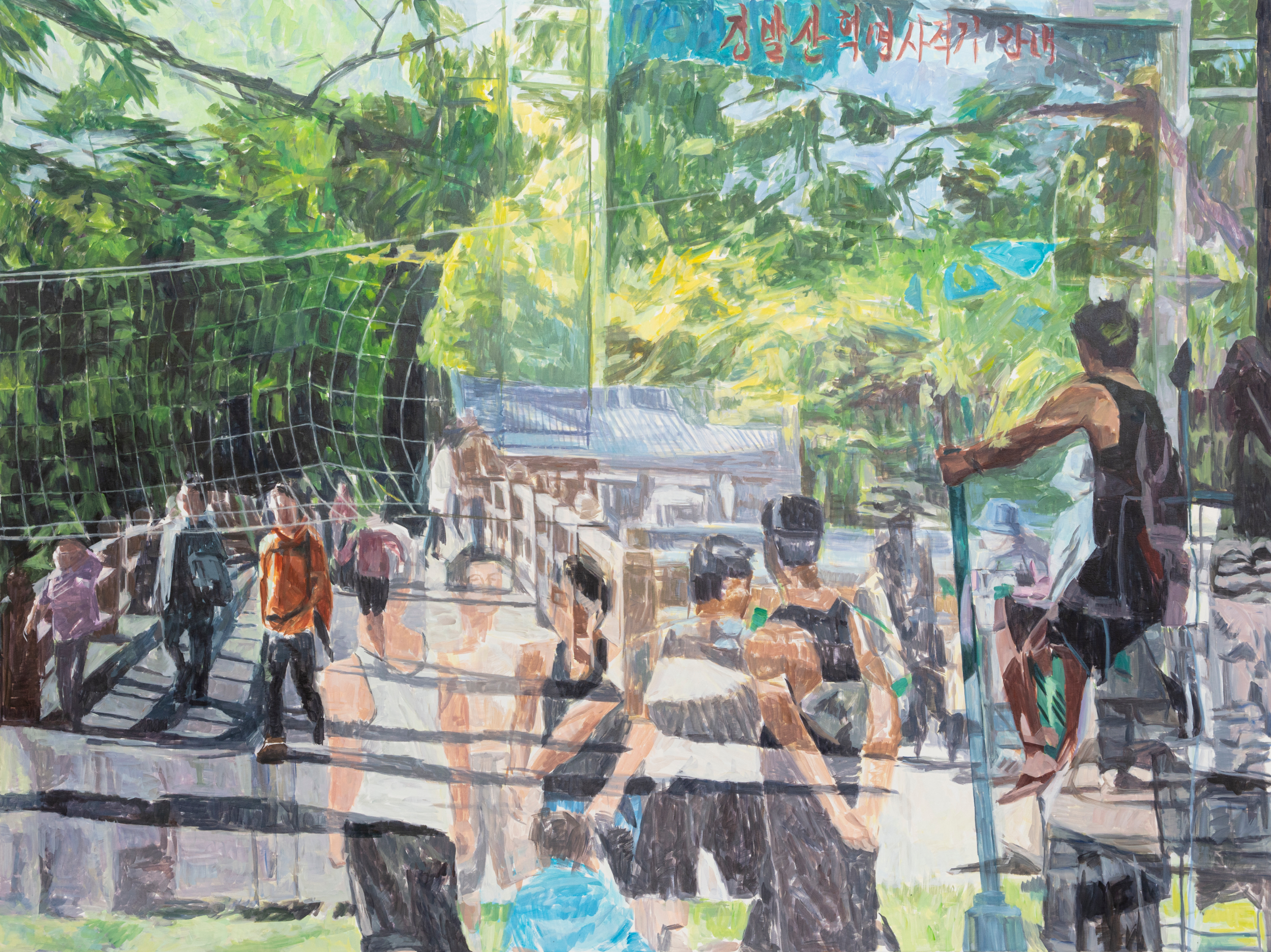
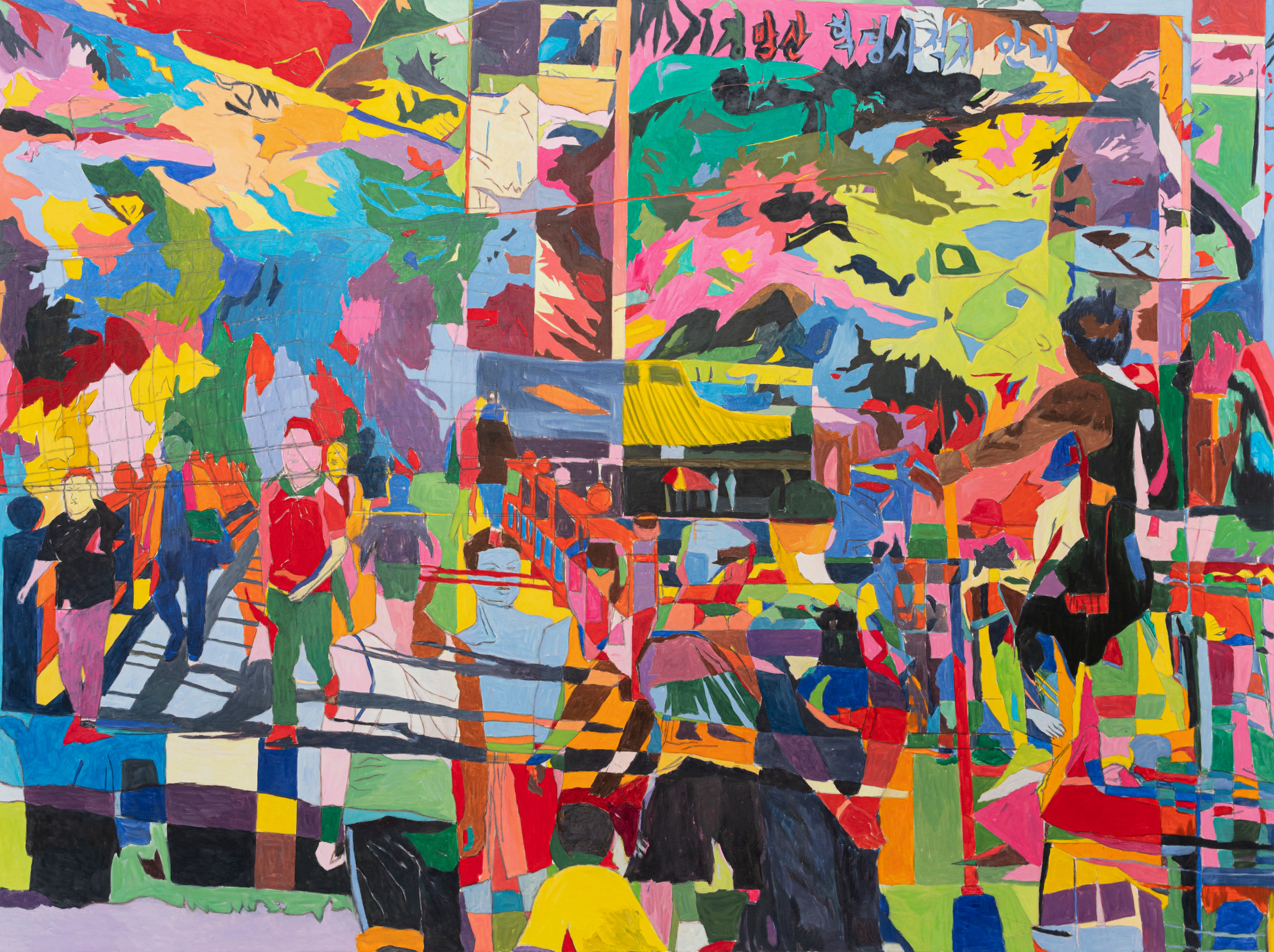
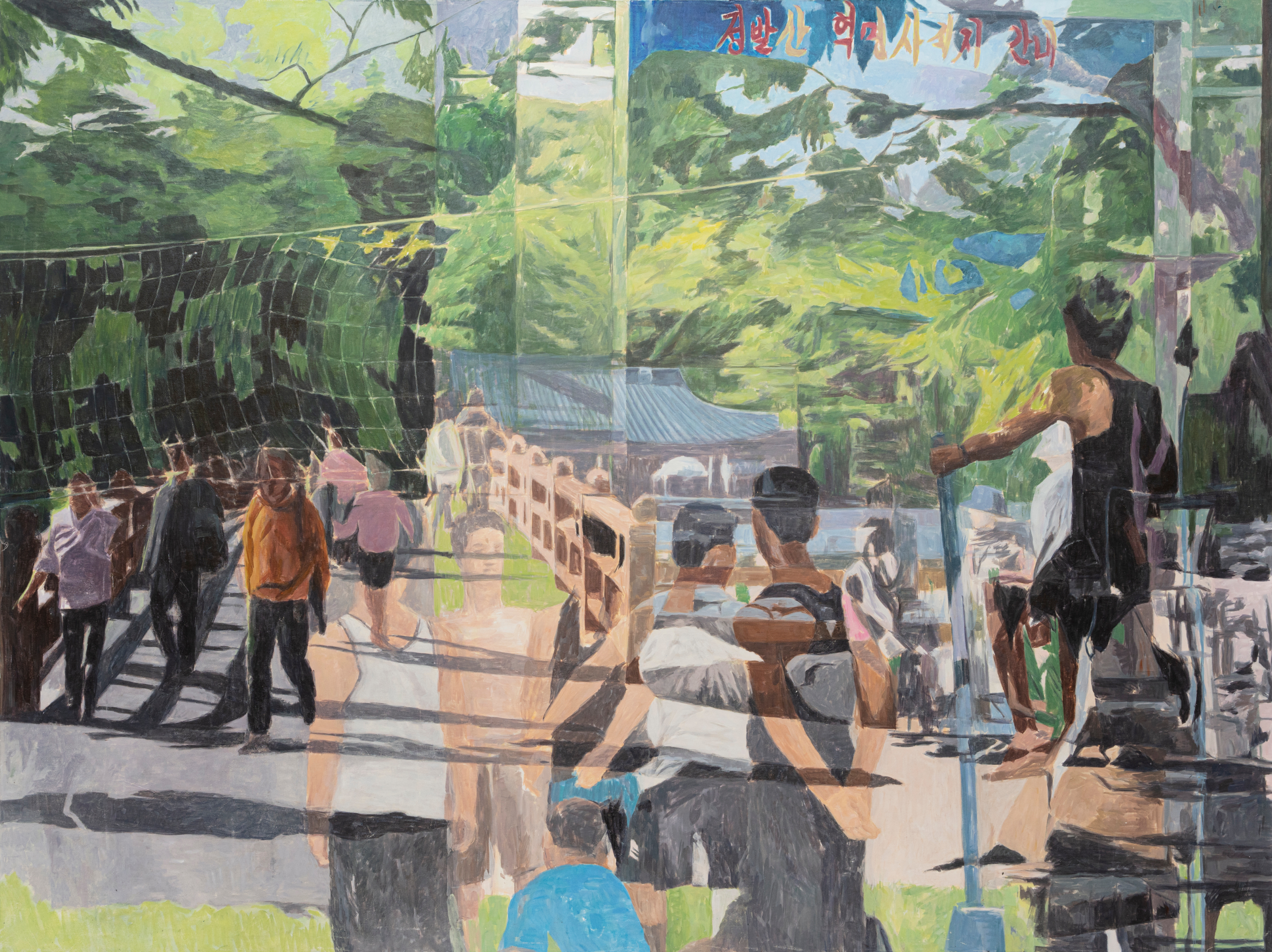
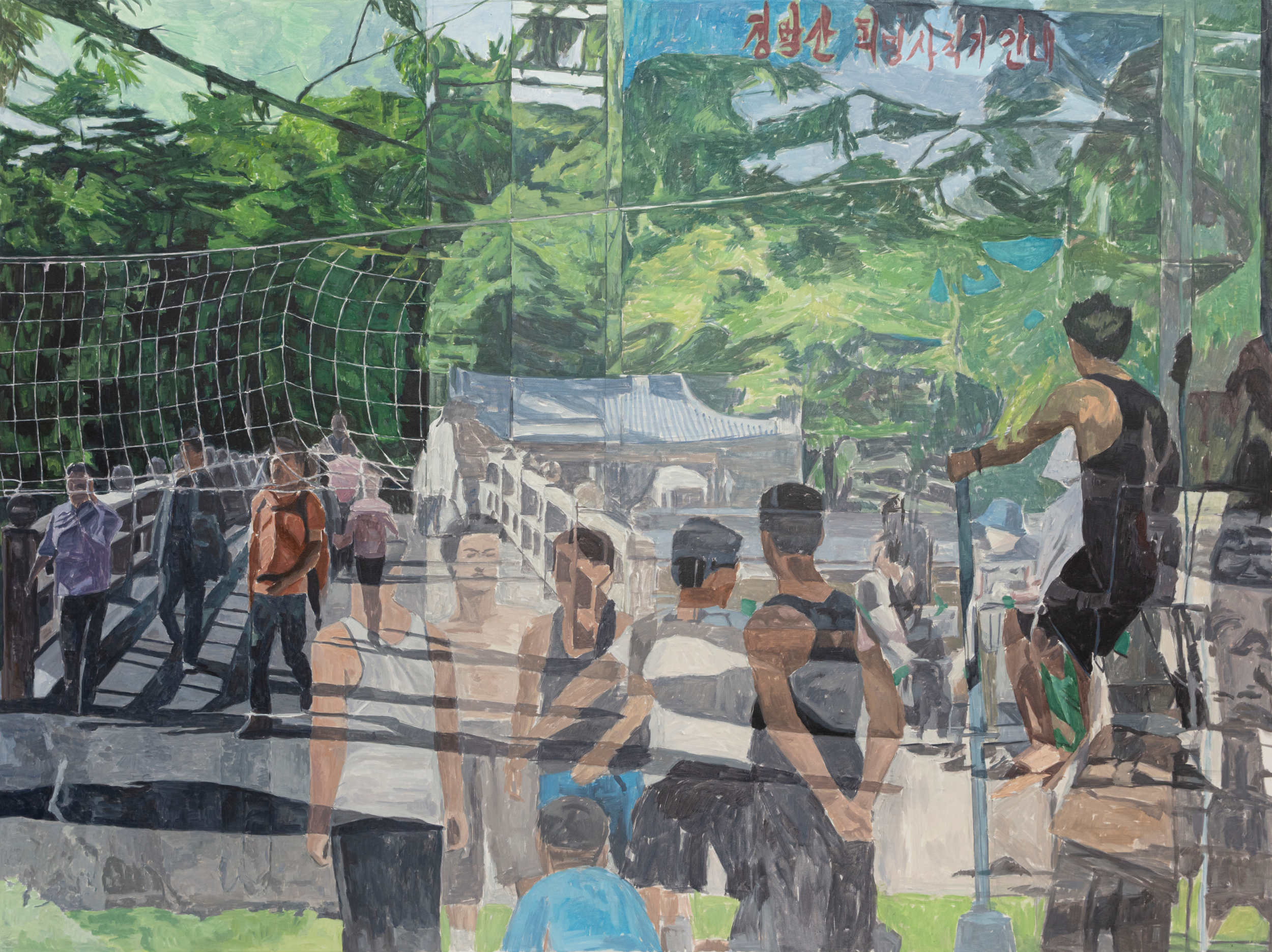
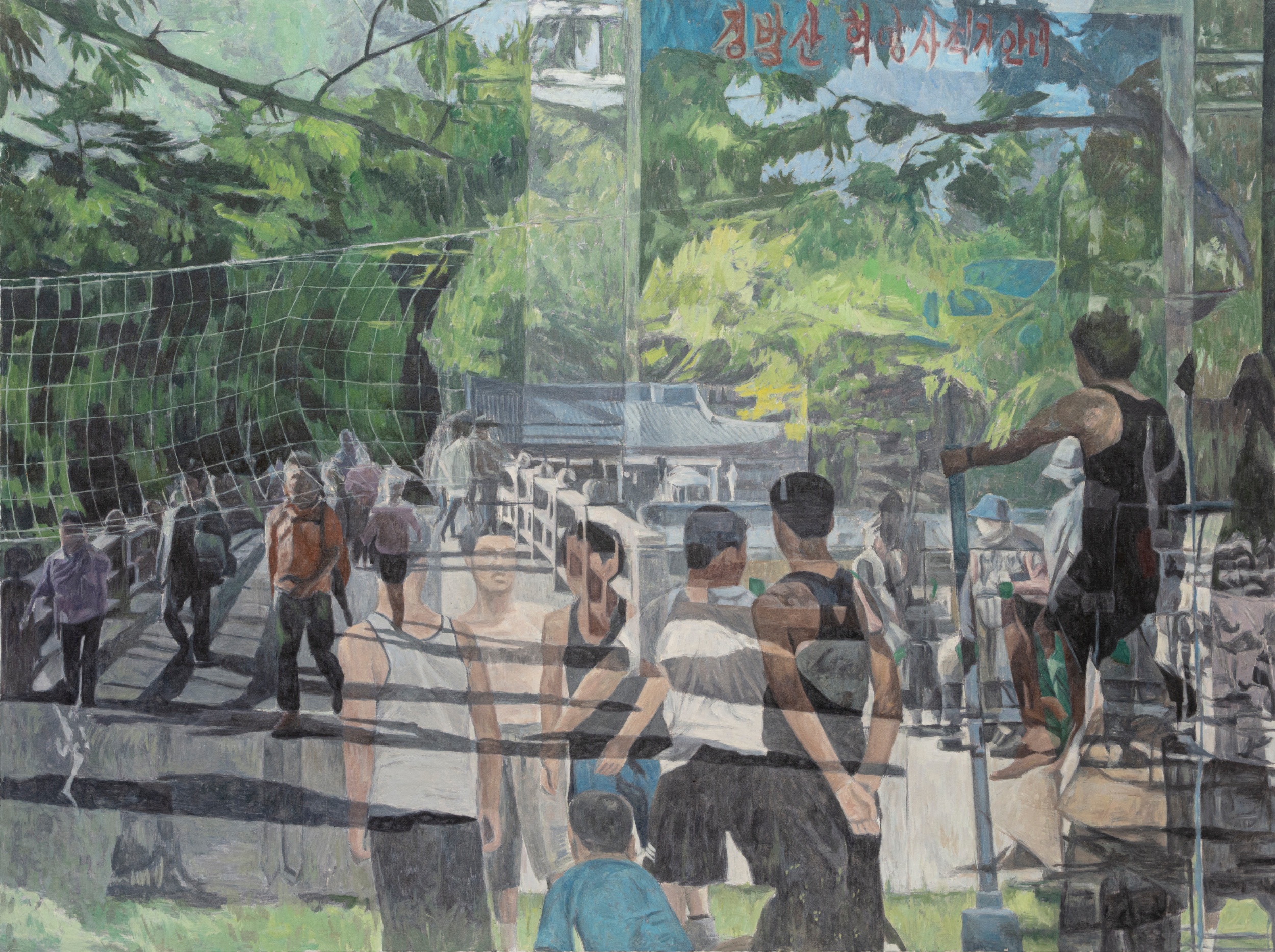
From this composite I went on to paint a space in which North and South coexist. That space exists nowhere but in the painting. For each work I set a goal to be reached, and from that goal I determine the process of painting and the principles that govern the choices made along the way. When the goals and principles change, the paintings change with them, immediately.
The work exposes, through the structure of painting itself, a mechanism of perception: how our gaze divides a scene (division) and how it weaves it back together (de-vision). The border, then, is not an event outside the picture but something that occurs within it — as decisions about composition, form, rhythm, density and colour.
The central method of the series lies in refusing to present a scene as something stable, and instead exposing the process by which the image fragments and sutures itself. I break the scene into panel-like sections, overlay clues from different times and places, erase and paint over, and leave “traces of decision” across the surface. Structural devices such as diagonal cuts, panelling and grid structures work by generating borders within the picture and, at the same time, suturing them again. In this process the viewer’s gaze never settles on a single point but keeps moving, and any attempt to read one complete landscape continually slips. In this way the work converts the gap between the visible and the invisible into visual experience. Repetition here is not the reproduction of an identical scene but the accumulation of a differently chosen suture each time. The images have shifted from photographic reference to reconstruction from memory, along a nonlinear path.
Through visual imagination, the series tests within the field of painting what forms the conditions of coexistence might take — and how easily those conditions come apart and are woven together again.
Division is invoked over and over in Korean society, and yet it remains an area difficult to speak of in one’s own, individual language. This border does not merely constrain physical space; it can also become an invisible wall that produces self-censorship and a norm of silence. My work is therefore an attempt to visualize a landscape that cuts across this norm of silence.
(탈)시각 분단
작업 <(탈)시각 분단>은 북한의 일상 풍경과 남한의 또 다른 일상 풍경을 하나의 장면으로 합쳐 반복적으로 그리는 회화 연작이다. 출발점은 북한에서 배구하는 사람들의 모습과 남한 강원도의 산을 걷는 사람들의 모습이 담긴 두 장의 사진을 합성한 장면이다. 즉각적으로 분단의 상징이 되기 어려운, 남과 북 어디에서든 볼 수 있을 법한 장면을 선택했다.
그리고 이 장면을 토대로 남과 북이 공존하는 공간을 그려나갔다. 그 공간은 이 그림 속에서만 존재한다. 각 그림마다 도달하고자 하는 목표를 설정하고, 그에 따라 그리는 과정과 그 안에서의 선택 원칙을 정한다. 달라지는 목표와 원칙에 의해 그림도 곧바로 달라진다.
작업은 우리의 시선이 어떻게 장면을 ‘나누고’(division), 또 어떻게 다시 ‘엮어내는지’(de-vision)라는 지각의 메커니즘을 회화의 구조로 드러낸다. 즉, 경계는 화면 밖의 사건이 아니라 화면 안에서 발생하는 구도·형태·리듬·밀도·색의 결정으로 나타난다.
연작의 핵심 방법은 하나의 장면을 안정적으로 보여주는 대신, 이미지가 스스로 분절되고 봉합되는 과정을 노출하는 데 있다. 나는 장면을 패널처럼 쪼개거나, 서로 다른 시간·장소의 단서를 겹쳐 놓고, 지우고 덧칠하며, 화면 곳곳에 ‘결정의 흔적’을 남긴다. 대각선 절단, 패널화, 격자(그리드) 구조와 같은 구조적 장치는 화면 내부에서 경계를 생성하고, 동시에 다시 봉합하는 방식으로 작동한다. 이 과정에서 관객의 시선은 한 지점에 고정되지 않고 이동하며, 완전한 하나의 풍경을 읽으려는 시도는 끊임없이 미끄러진다. 그렇게 작품은 “보이는 것”과 “보이지 않는 것” 사이의 간극을 시각적 경험으로 전환한다. 이 연작에서 반복은 동일 장면의 재현이 아니라, 매번 다른 봉합 방식의 선택을 축적하는 과정이다. 이미지는 사진 참조에서 기억의 재구성으로, 비선형적으로 옮겨갔다.
이 연작은 시각적 상상을 통해 공존의 조건이 어떤 형태로 구성될 수 있는지—그리고 그것이 얼마나 쉽게 분열하고 다시 엮이는지—를 회화의 장 안에서 실험한다.
분단은 한국 사회에서 반복적으로 호출되면서도 개인의 언어로 말해지기 어려운 영역이다. 이 경계는 물리적 공간을 제약할 뿐 아니라, 자기검열과 침묵의 규범을 낳는 보이지 않는 장벽이 되기도 한다. 따라서 나의 작업은 이 침묵의 규범을 가로지르는 풍경을 시각화하려는 시도이다.