

Photography: Kichun Park
Photography: Kichun Park
Photography: Kichun Park
Photography: Kichun Park
Photography: Kichun Park
Photography: Kichun Park
Photography: Kichun Park
Photography: Kichun Park
Photography: Kichun Park

Photography: Kichun Park
(De-)vision Division
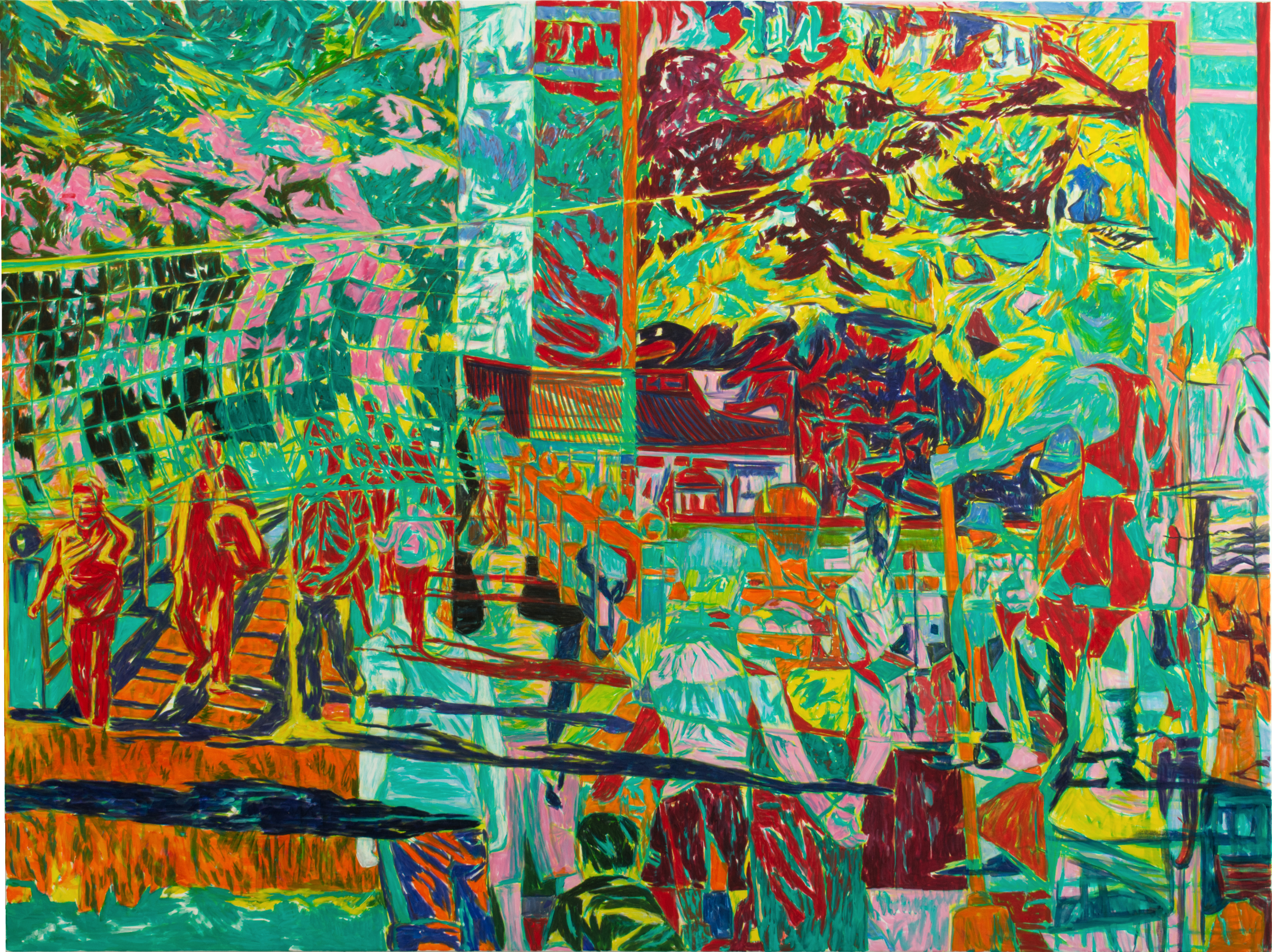
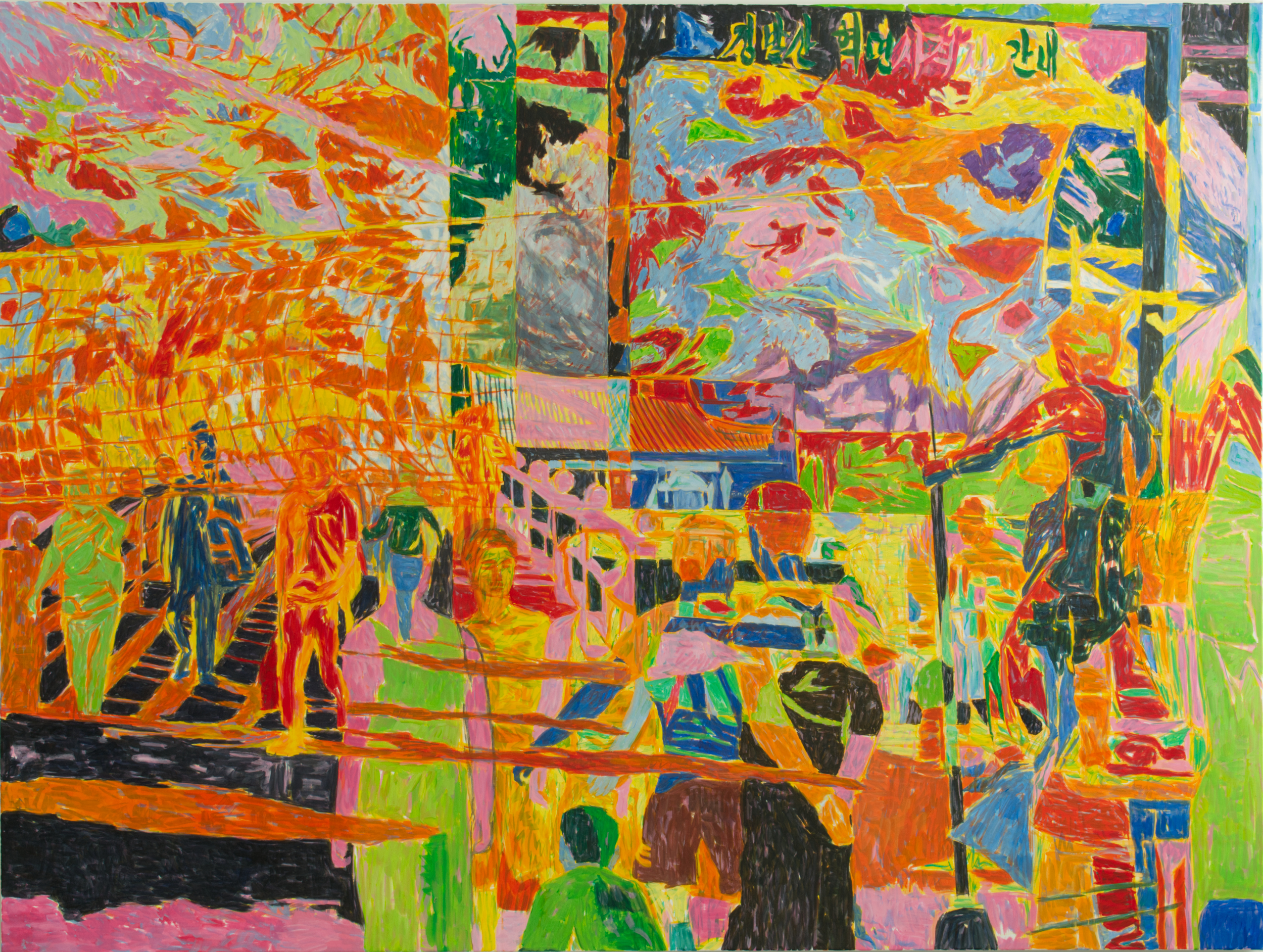
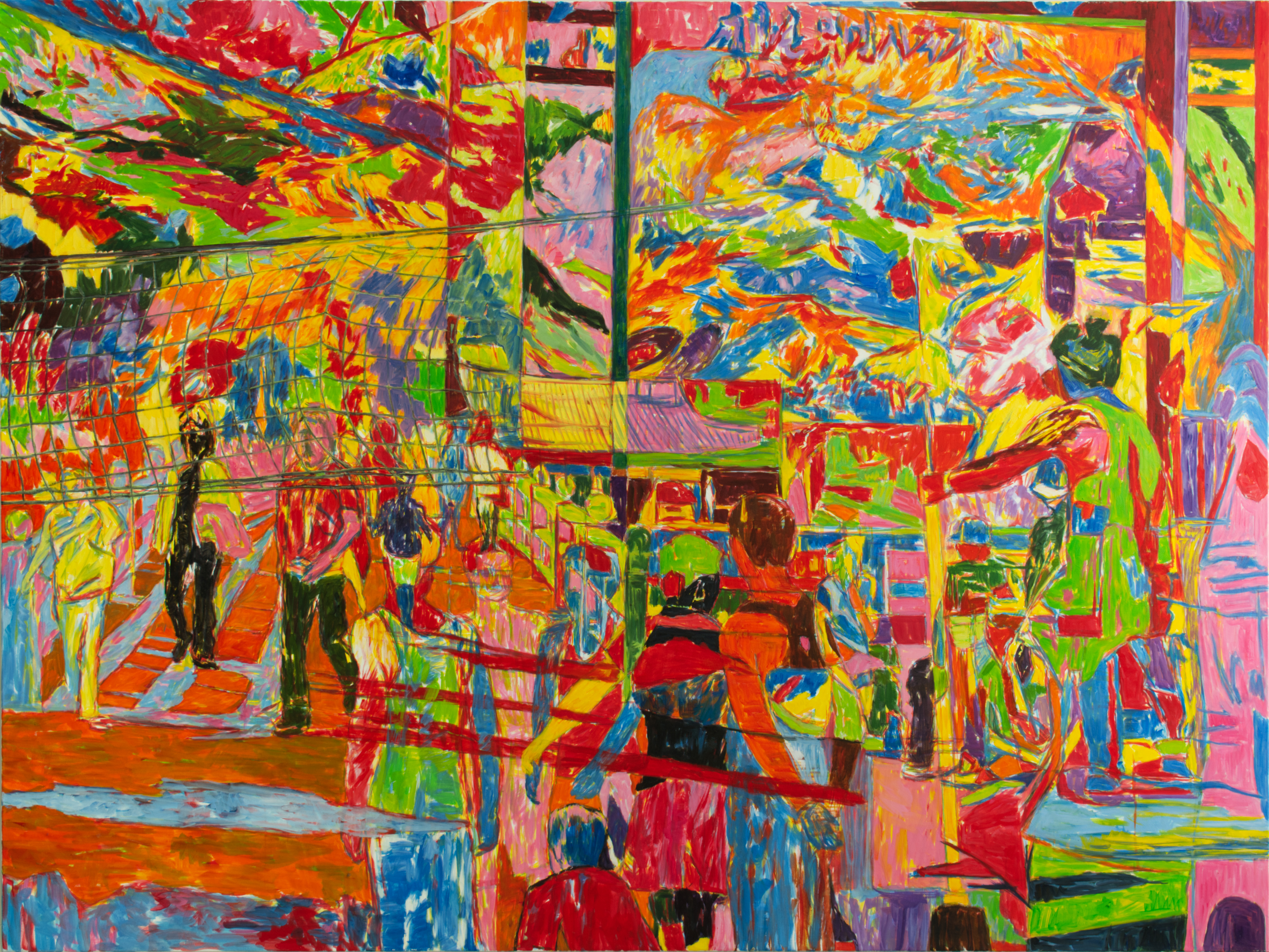
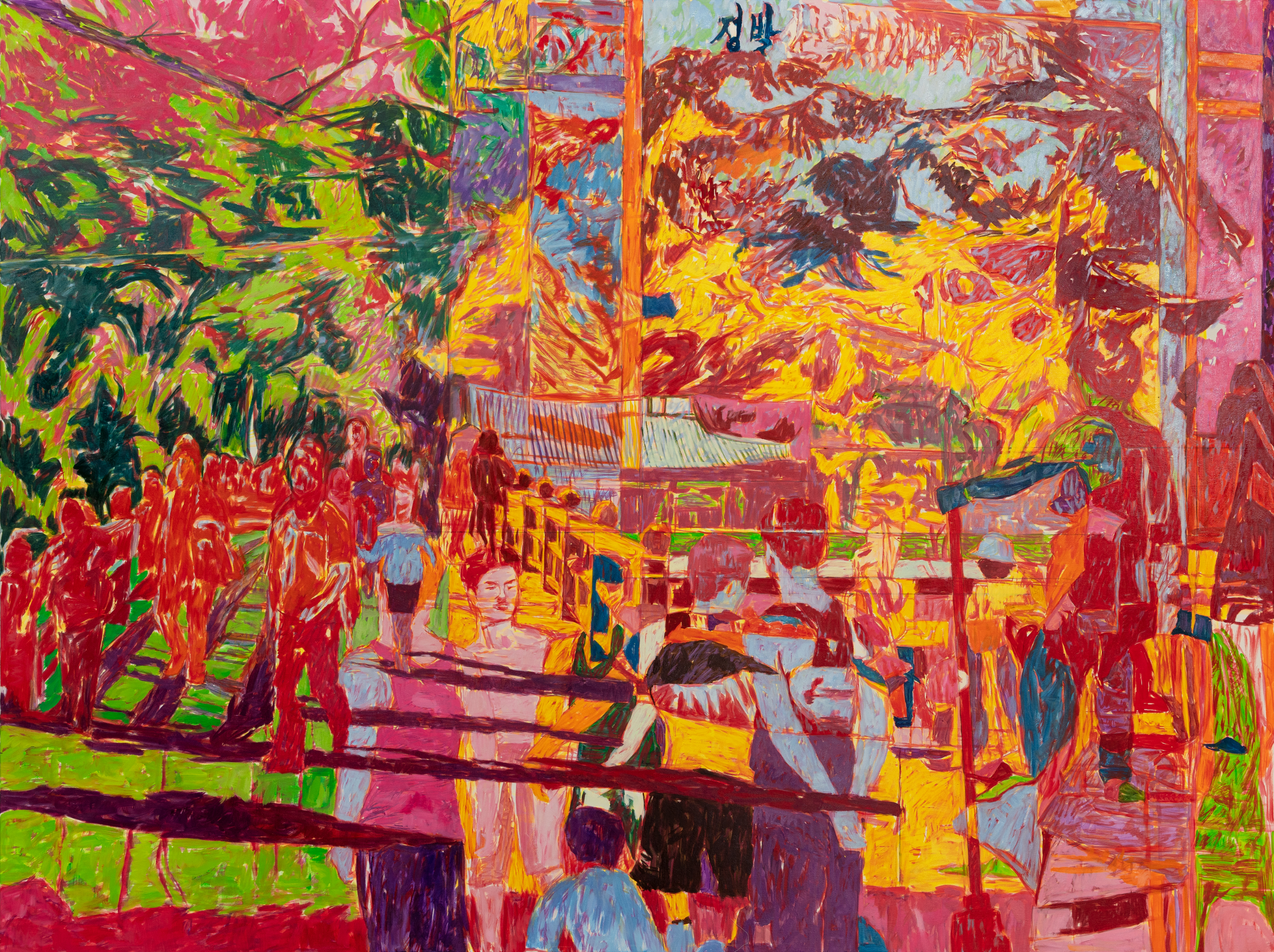
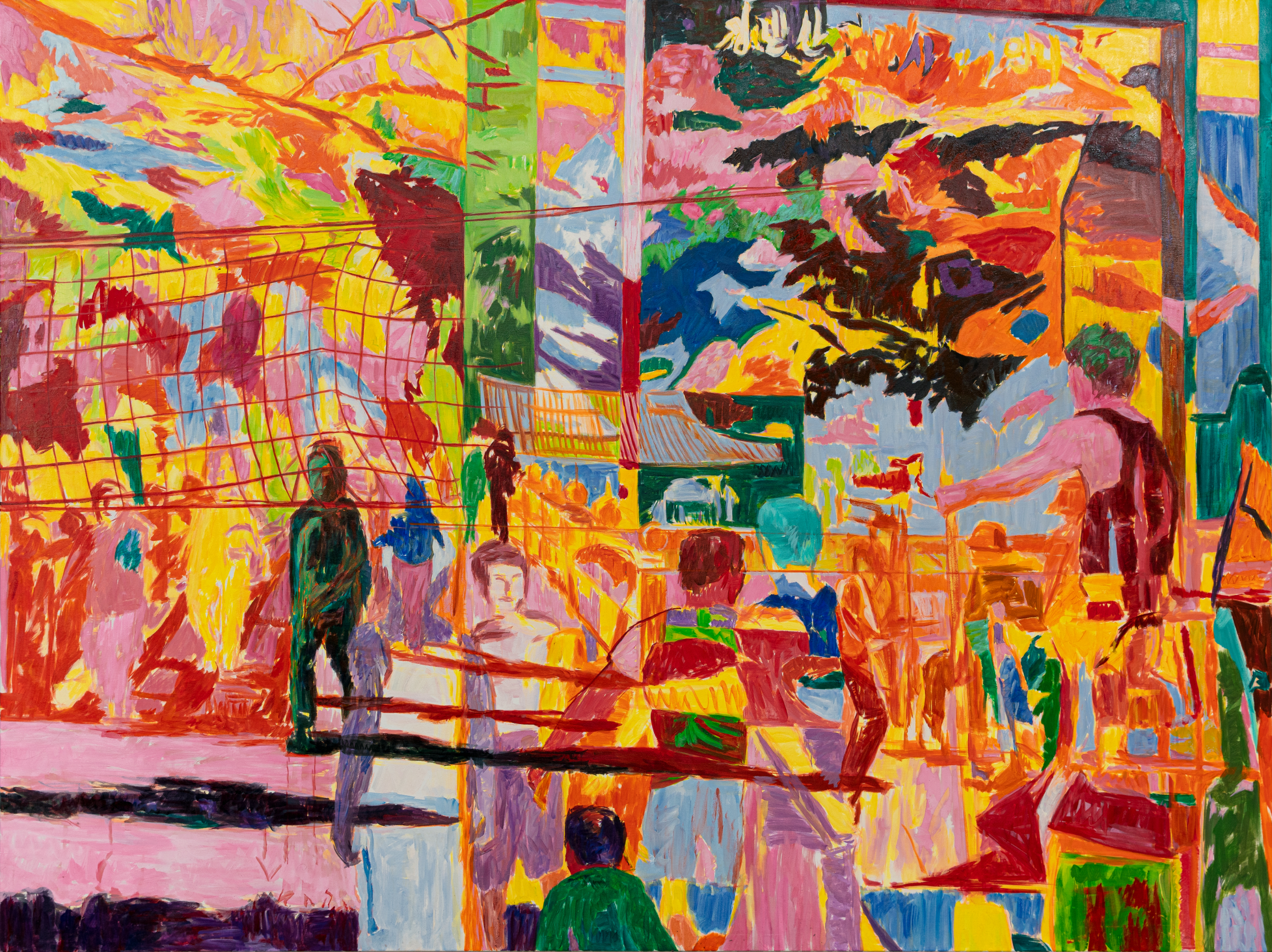
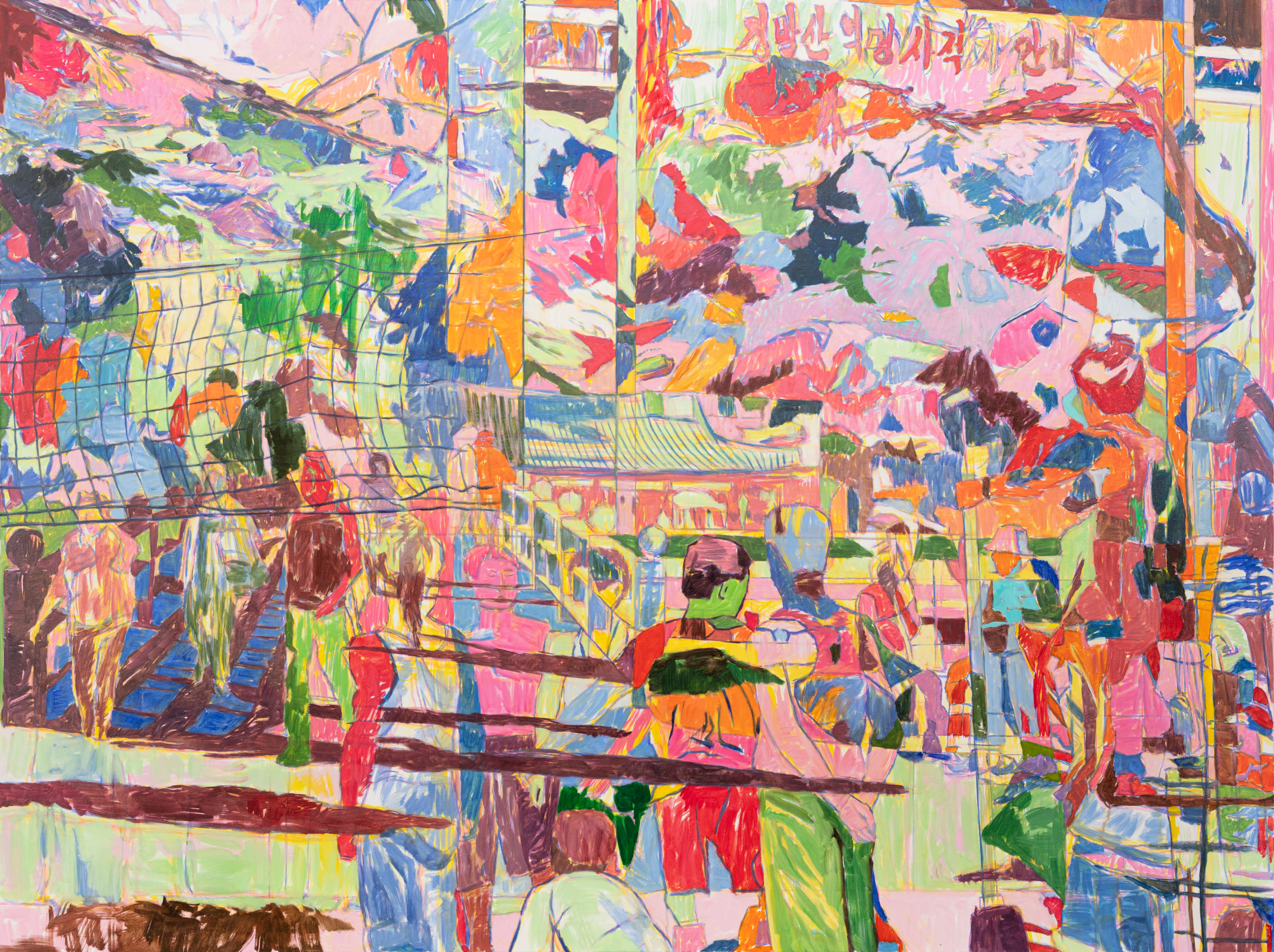
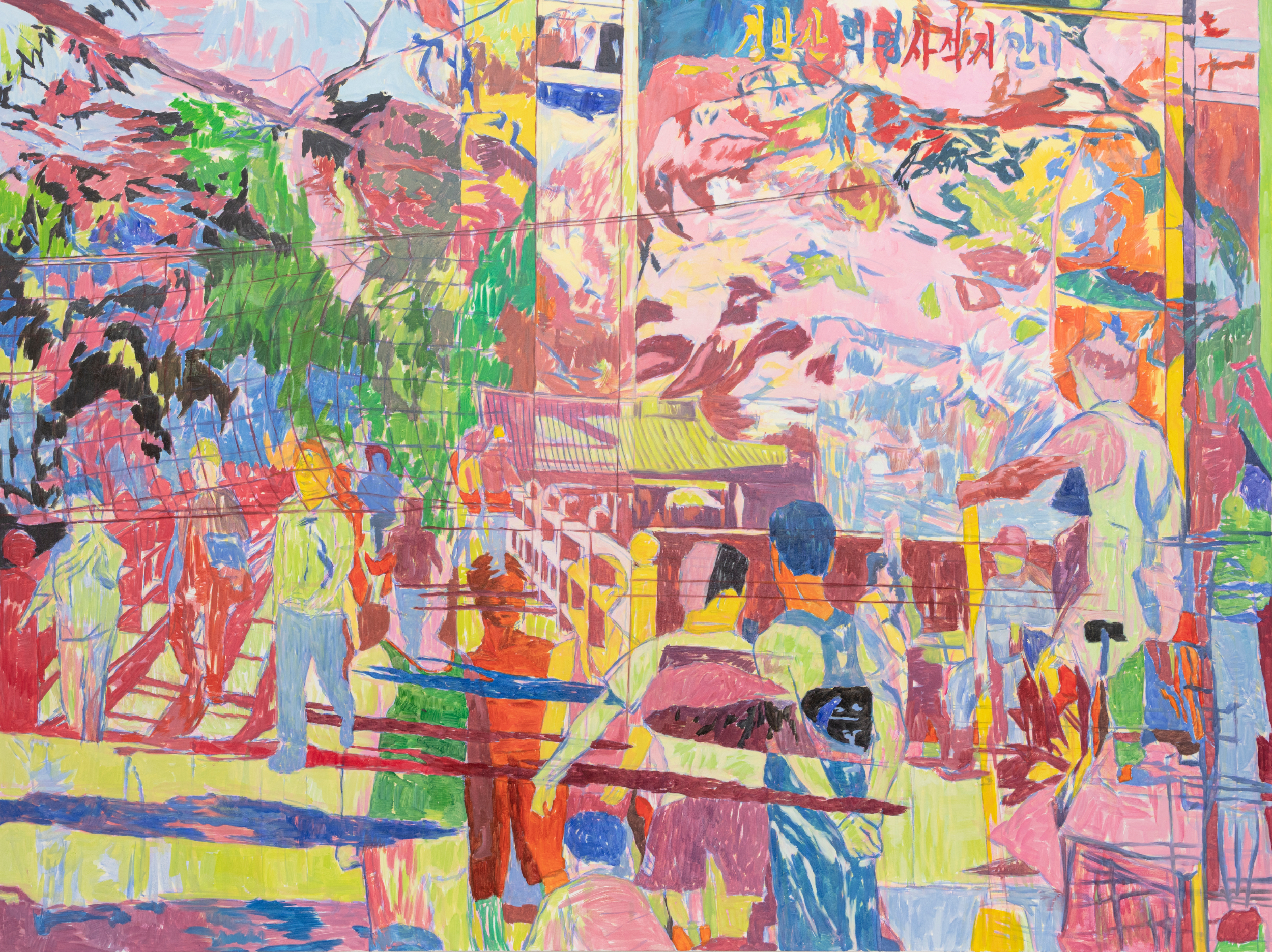
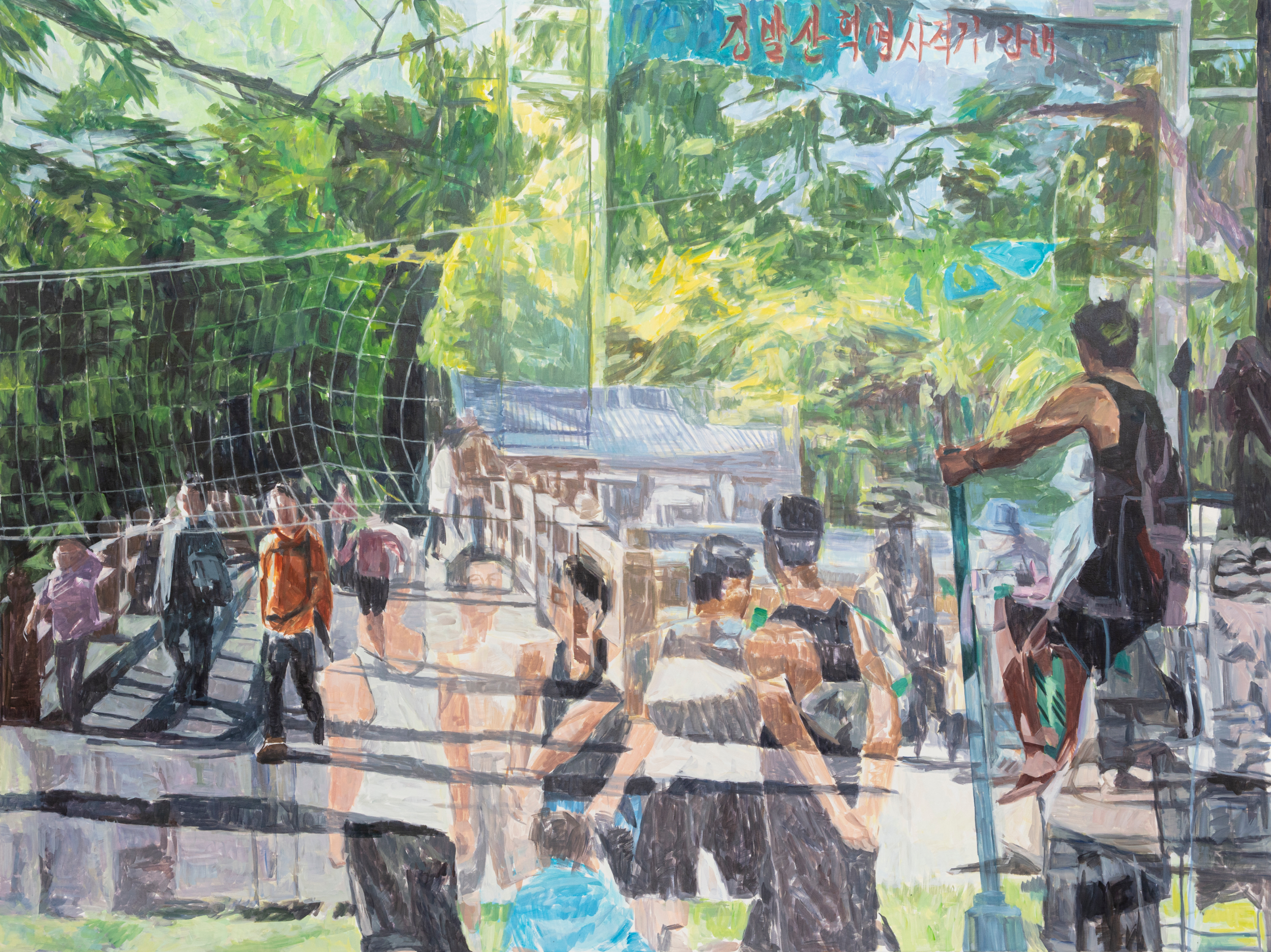
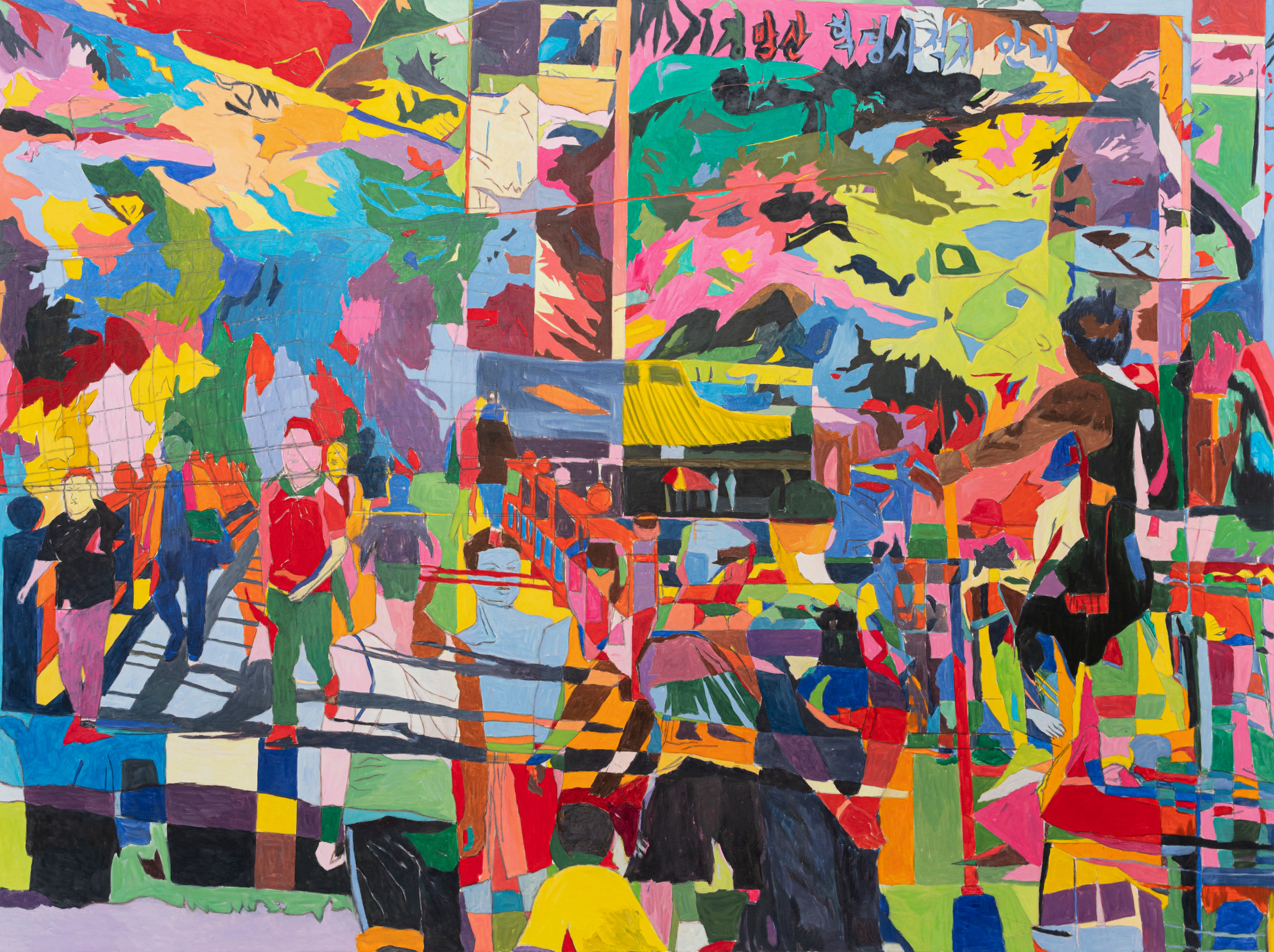
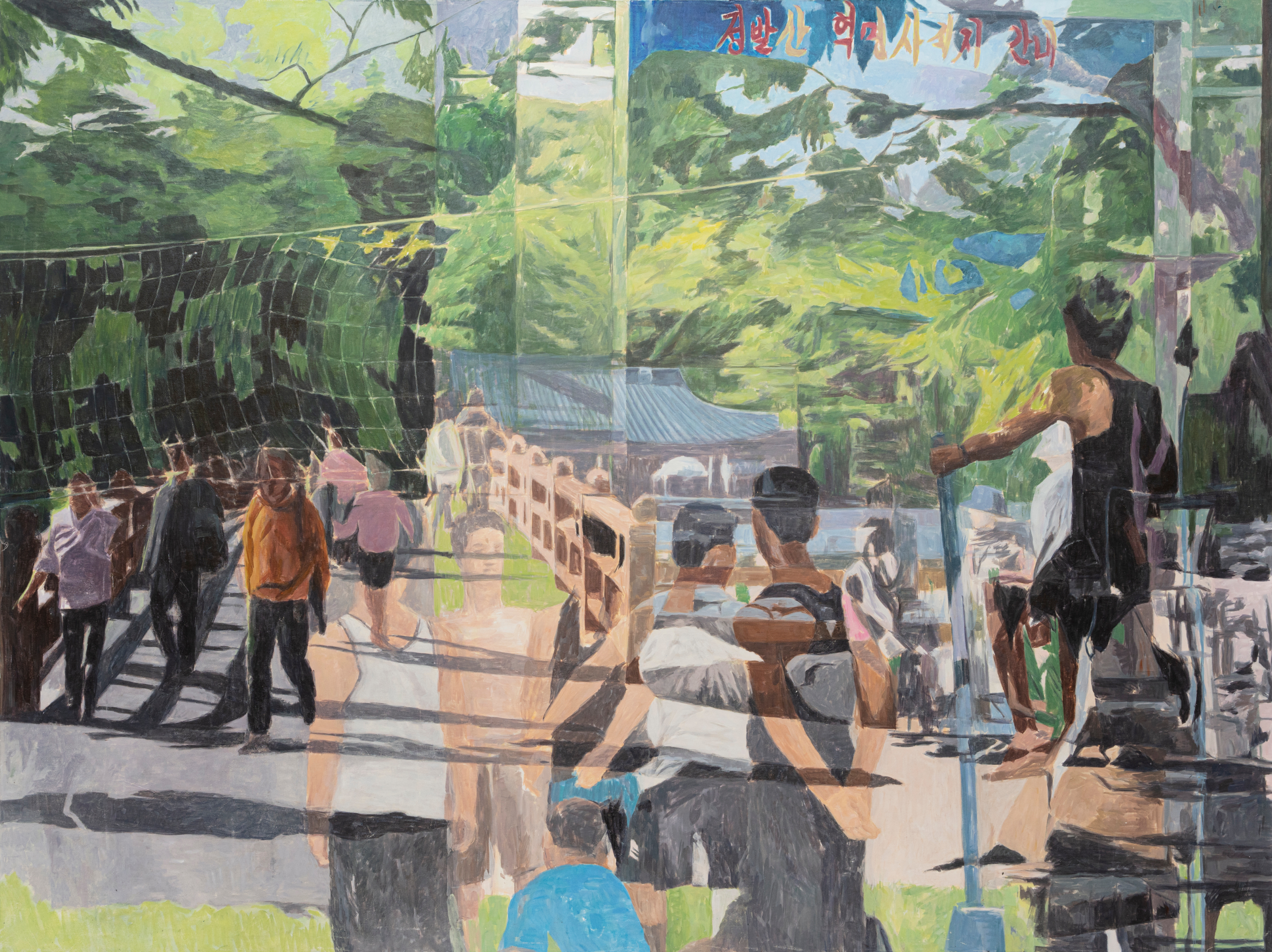
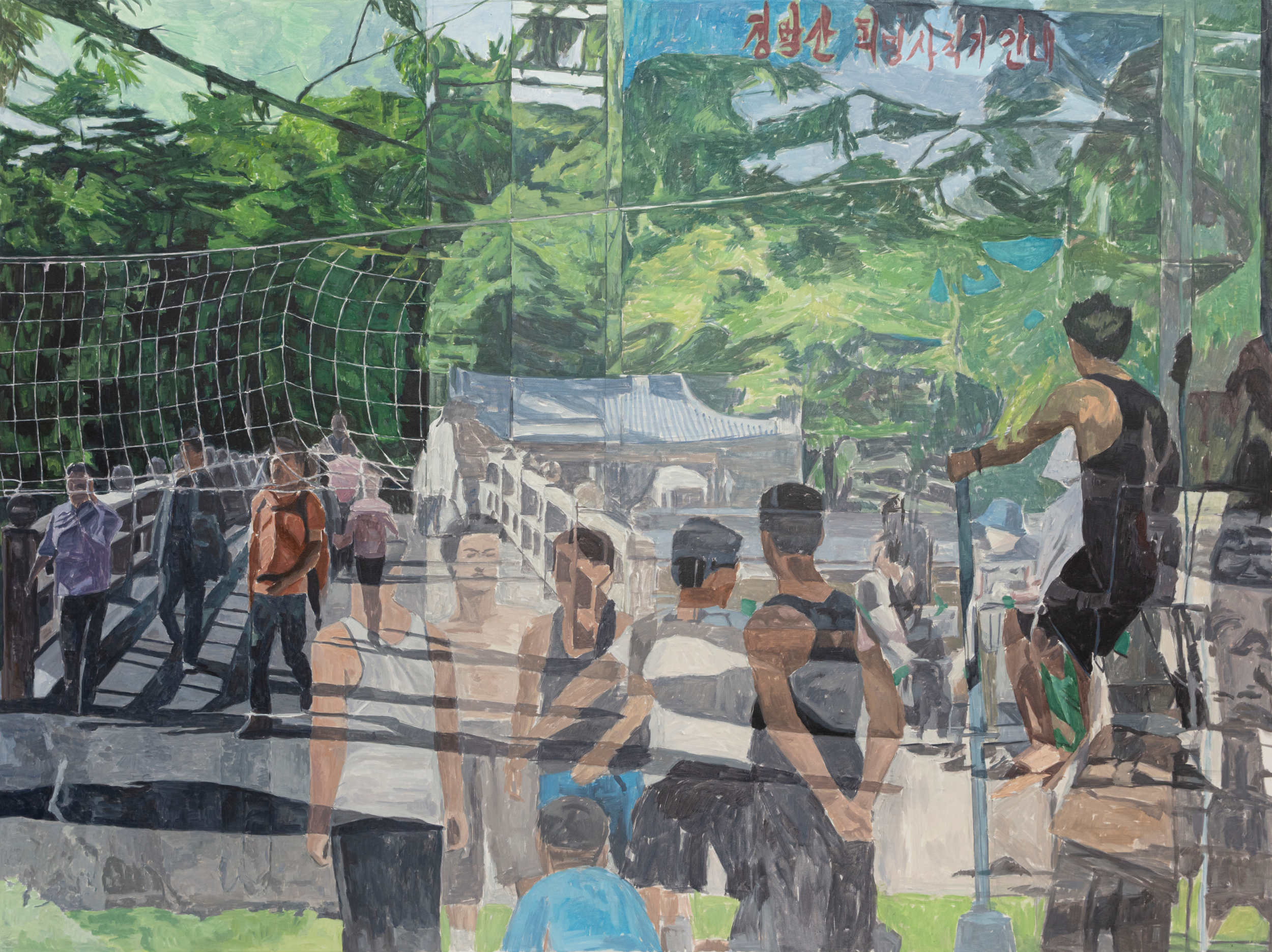
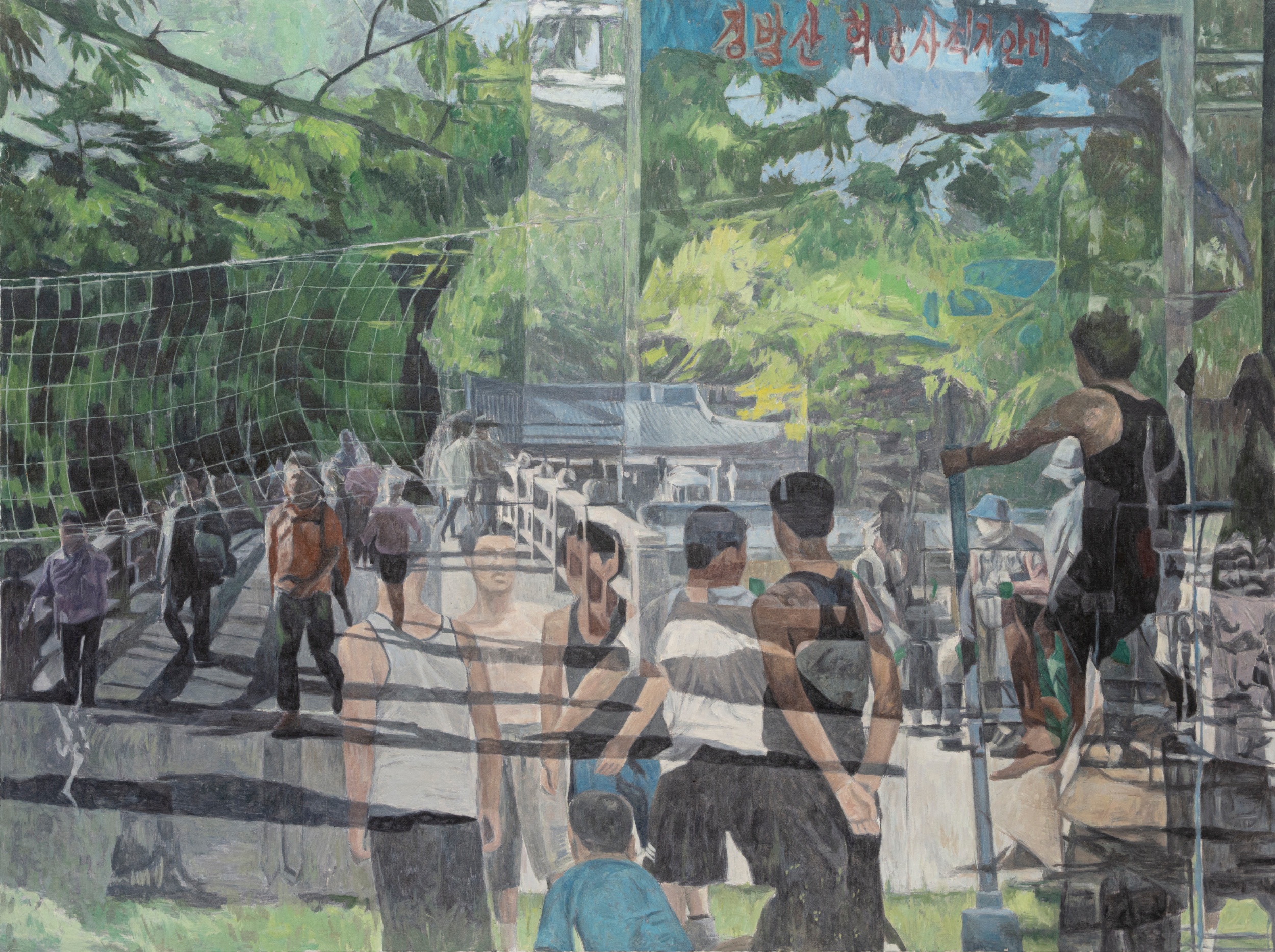
With this series, I paint landscapes in which not only the actual scenes but also the painting techniques and artistic methods used in the process gradually dissolve their boundaries. The paintings of (De-)vision Division are variations of the motif described above. The idea behind the repetition is to envision the two divided Korean states as unified – yet blurred and modified. As the invisible boundaries between the two depicted scenarios — and, metaphorically, between the two divided states — are loosened, the long-imagined reunification or peaceful coexistence of the two Koreas becomes tangible, at least in the eyes of the viewer. Seen in this light, the well-known statement on German reunification by former Federal Chancellor Willy Brandt, “What belongs together is growing together,” can also be read alongside my paintings.
Example
— (De-)vision Division 10, oil on canvas, 180 × 240 cm, 2023
Diagonal bars and grid-like boundaries cut and suture the scene, shifting the focal reading as the viewer’s gaze moves.
Different times and places interlock in the foreground, while the bridge, railing, and tower structure at the center establish an axis of coexistence. A diagonal bar (a shadow) crosses the ground, repeatedly severing the horizon and dividing the scene into panel-like segments that are then rejoined. On the left, the green of the forest and a cluster of red figures create a line of procession; on the right, under a yellow–red heat, facilities and mountain ridgelines dissolve into abstract color fields. Short strokes across the surface and erased edges reveal decisions and revisions, while cropped scraps of sky and reflected light braid together—and then loosen—the two zones of North and South. As the gaze travels, the same scene alternates between different narratives. In this work, coexistence is proposed not as fusion, but as remaining together while slightly out of joint, with intervals kept intact.
Division is both a physical border and an invisible barrier that constrains thought and speech. The work proposes an imagination of landscape that passes beyond that barrier, inviting the viewer into a layered reality that is complex and often buried in silence.
Studio Notes
(De-)vision Division 13. Oil on canvas, 180 x 240 cm, 2025
As the thirteenth work in the series, I picked the tempo back up from the slowdown in no. 12, increasing the density of the surface while making the narrative flow more explicit. The painting has become more rhythmical, with stronger color contrasts and clarity. As different formal languages intersect to construct the image, the landscape moves through a motion of dismantling itself and forming anew. I decided to run one more experiment to further tighten the bond between the formal language and the scene’s narrative.
(De-)vision Division 12. Oil on canvas, 180 x 240 cm, 2024
As the twelfth work in the series, I eased the narrative tension that surfaced so strongly in no. 11 and pursued a slower yet denser painterly development. By decelerating the storyline, I aimed to build a more refined structure and to explore a rhythm in which the elements on the surface interlock with care.
The process, however, proved far slower and more complex than expected. My attempt to fine-tune the grain of the narrative ended up delaying progress; the deeper the thinking, the slower the hand. I repeatedly flipped the canvas and paused, gauging the work’s direction.
Taking a long time to complete, this piece lays bare the very process of seeking balance between painterly thought and sensation. The push and release of the narrative—its focus and hesitation—remain across the surface as visible traces.
(De-)vision Division 11. Oil on canvas, 180 x 240 cm, 2024
In this work, I wove the various scenes and elements of the surface into multilayered relations, aiming to let the internal dialogue between painterly language and landscape emerge more assertively. I tuned the direction and rhythm of the brushwork, the density and texture of the paint, and the stratification of color with care, so that differing formal energies might collide yet coexist. Through this process, the landscape’s narrative resists reduction to a single viewpoint and expands into a structure where the painting’s own time and sensation stand in juxtaposition.
Feeling I may have lost a measure of the equilibrium I had achieved in the previous piece, I’ve decided to devote the next painting to finding that point again.
(De-)vision Division 10. Oil on canvas, 180 x 240 cm, 2023
In this piece, I set aside fixed targets and followed the current of the surface, staying with the sensation of the moment. It was an attempt to locate a balance that felt neither heavy nor light.
Throughout the process I calibrated the relationship between structure and detail, testing the selection and placement of color step by step. I first established the key hues, then repeatedly overlaid the surrounding tones, integrating the work’s overall formal language as I went. I relied on photographs more than in works 7–9, yet became aware that I had moved beyond the same mode of reference and into a wholly different painterly language.
As a result, the interplay of color and the density of the surface settled into a natural equilibrium, and the work opened a new turning point for the series.
(De-)vision Division 9. Oil on canvas, 180 x 240 cm, 2023
As the ninth work in the series, I extended the new painterly approach discovered in the previous piece, aiming for richer oil handling and a broader range of formal languages. I experimented with varied uses of color and brushwork, exploring a balance between surface density and fluidity.
Drawing on the experience from no. 8—where an overly rigid sketch kept forms from blending—I kept the structural information but avoided excessive control, focusing instead on an improvisational painterly flow.
As a result, the use of color and the rhythm of the brushwork come through more directly, marking an important turning point as a procedural attempt toward expanding the painting’s language.
(De-)vision Division 8. Oil on canvas, 180 x 240 cm, 2023
As the eighth work in the series, I set out to deepen the painterly inflection reached in the previous piece. To counter the lightness I had sensed in that work, I reinforced structural density this time with a more concrete, weighty sketch.
Across the process, I retraced prior achievements and added small variations along that continuum, while also probing new directions—yielding a result where balance and disarray coexist.
Although the painting felt somewhat indistinct right after completion, returning to it later, it registered as a work with an expanded sensibility and greater painterly thickness than before.
(De-)vision Division 7. Oil on canvas, 180 x 240 cm, 2022
As the seventh work in the series, I set out to test a new painterly approach. Building on clues from the earlier pieces, I aimed to move beyond representation toward a composition where forms don’t stand in isolation and detail and whole mesh organically.
Rather than following the photograph’s colors, I grounded color choices in the painting’s internal formal narrative, constructing the surface from within. I kept a charge in the process to preserve fresh brushwork. As the landscape’s greens shifted into reds, I realized my own sensibility was turning—and I welcomed it.
Though I finished with some doubts about “lightness,” time confirmed the decision was right. This work opened the possibility of a new approach and marked a crucial turning point that set a decisive direction for the series.
(De-)vision Division 6. Oil on canvas, 180 x 240 cm, 2022
As the sixth work in the series, this piece attempts a return to a legible landscape. After the fifth, I found myself caught between hope for a new approach and uncertainty about direction, and I sought to reconnect with the motif. Feeling the rupture of the previous work, I moved ahead without a fixed goal, keeping the process open so as not to lose freshness.
The work progressed relatively naturally, yet it ultimately circled back to a representational landscape. Through this I realized that my way forward does not lie in simple representation, and I began preparing the next phase—one that would set aside photographic reference as much as possible. As a transitional painting, it establishes a new point of departure through looking back, marking an important fork in the flow of the series.
(De-)vision Division 5. Oil on canvas, 180 x 240 cm, 2022
As the fifth work in the series, I ventured a bold painterly experiment beyond representational modes. After embedding as much structural and informational detail as possible in the sketch, I excluded photographic reference altogether and built the surface solely through combinations of color.
The aim was to focus on the act of painting itself and to block, as far as possible, any re-entry of representation. Throughout, I had to contend with persistent doubt about whether this was a meaningful path.
Barely legible to me even near completion, the work ultimately became a turning point—visually resolving a long-standing “irreconcilable opposition” within me. By stepping past the boundary of representation, it opened a moment in which the painterly language began to expand of its own accord.
(De-)vision Division 4. Oil on canvas, 180 x 240 cm, 2021
As the fourth work in the series, I set out to move away from the damp, heavy tones of the previous piece and to find a fresher, lighter painterly sensibility. I watched the overall flow so that forms wouldn’t become isolated or stiff, adjusting the rhythm and breath of the brushwork as I went.
The core aim was to sustain “freshness,” yet that also meant facing a painterly dilemma: the more I layered the strokes, the heavier and harder the surface became; but if I painted on too quick a judgment, the formal force weakened. I worked to balance speed and density between these two poles.
In the end, the painting came together with a much lighter breath than before, a surface where freshness and stability coexist. At the same time, I recognized the limitation of still remaining within a representational frame—an awareness that became a key driver of the series’ subsequent shift.
(De-)vision Division 3. Oil on canvas, 180 x 240 cm, 2021
In this painting, I first wanted to address a recurring trait in my work—the tendency to turn damp and heavy—and, alongside that, to continue untangling the separation of tone and color. As before, I laid out the structure, sketched, and began to paint. Wondering what might change if I altered the method, I brought in a large wooden board, set it up like an oversized table, laid the canvas flat, and started working. The aim was to gain fresher, more vivid brushstrokes and color.
Partway through, I stood the canvas up to check the progress and realized the image was advancing more stiffly than I’d expected. It felt like finishing it this way would carry little meaning, so I kept the canvas upright and continued. With multiple techniques mixing together, the process became riddled with questions and, in the end, quite confused.
Ultimately, I didn’t break free of a representational approach, and the result reads as a confused picture. Still, the sheer amount of grappling helped me sort out my thoughts.
(De-)vision Division 2. Oil on canvas, 180 x 240 cm, 2021
In this painting, I chose to focus on separating tone and color. To that end, I decided to apply a glazing technique I had used once before. The assumption was that, once the overall tone of the surface was set, I could consider color more assertively as a separate layer.
After establishing the structure and sketch, I painted the image in monochrome. I resolved to use color boldly, yet the result was that the color died even more than in the first painting. I sensed an unresolved part of my thinking—something not yet separated—but I couldn’t clearly name what it was.
Because I began laying color before the monochrome layer had fully dried, the saturation seems to have dropped further. The outcome was a very damp, murky painting.
Still, the process proved meaningful: it suggested that the limits of my thinking can set the limits of my actions, and that, to move the work forward in a meaningful way, I need to clarify my thinking.
(De-)vision Division 1. Oil on canvas, 180 x 240 cm, 2021
As the first work in the series, I kept the process fully open and used it as a point of departure to probe painting’s fundamental problems. I stretched the canvas and, following my usual sequence of priming and sketching, built the surface by organizing tone and color.
While shaping form and structure posed no great difficulty, an impasse emerged where color was subsumed by tone. This issue—color getting trapped inside tone—felt like an inevitable barrier faced by representational painting, and it became the core task I had to overcome. As a first experiment before that wall, I chose to maintain representation while searching for the painterly world beyond it.
About two-thirds in, I reached the dilemma of whether to stop or to push through; I chose to press on. The result was a heavy, deep surface, yet the problem of color remained. This piece marks the starting point of a painterly journey initiated by an acute awareness of the tension between representation and color.
(탈)시각 분단
작업 〈(탈)시각 분단〉은 북한의 일상 풍경과 남한의 또 다른 일상을 하나의 장면으로 합쳐, 반복적으로 그리는 회화 연작이다. 모티브는 북한에서 배구하는 사람들의 모습과 남한의 강원도에 있는 어느 산의 완만한 경사면을 걷는 사람들의 모습, 두 장의 사진을 합성한 장면이다. 한국은 1945년 이래 분단 상태에 있다. 햇볕정책(Sunshine Policy) 등 두 국가의 화해와 통일을 위한 여러 시도가 있었음에도 분단은 여전히 공고하며, 그 국경은 세계에서 가장 엄격히 통제되는 접경지대 가운데 하나로 꼽힌다. 이처럼 실제로는 왕래가 거의 불가능한 두 지역의 일상이 사진과 미디어의 차원에서는 하나의 화면 안에서 너무 쉽게 병치되는 지점이 내 연작의 출발점이다.
이 연작에서는 실제 풍경뿐만 아니라 그 과정에서 사용하는 회화 기법 및 예술적 방법에서 점차적으로 경계가 허물어져가는 풍경을 그린다. 〈(탈)시각 분단〉의 그림은 위에서 설명한 모티브의 다양한 회화적 변형을 담는다. 이 반복의 이면에는 분단된 한국의 두 국가를, 통일되었지만 흐릿하고 변형된 모습으로 상상하는 아이디어가 있다. 두 개의 묘사된 시나리오 사이, 그리고 은유적으로, 분단된 두 국가 사이의 보이지 않는 경계가 느슨해지면서 적어도 관객의 눈에는 오랫동안 꿈꿔왔던 통일 또는 평화로운 공존이 실체화되는 것이다. 이렇게 분단을 시각적으로 해소하는 과정을 통해 빌리 브란트 전 독일 총리의 독일 통일에 대한 유명한 명언 “함께 속한 것은 함께 성장한다”가 내 그림에도 적용될 수 있을 것 같다.
예시
— (탈)시각 분단 10. 캔버스 위 유화, 세로 180 cm x 가로 240 cm, 2023
전면에 남, 북의 서로 다른 시간·장소가 맞물리고, 중앙의 다리·난간·탑 구조가 공존의 축을 만든다. 바닥을 가로지르는 사선 바(그림자)가 수평선을 연속적으로 절단해 장면을 패널처럼 분할–봉합한다. 왼쪽은 숲의 녹과 붉은 인물 군집이 행렬의 이동선을 만들고, 오른쪽은 황–적의 열감 속에서 시설과 산 능선이 추상적 색면으로 녹아든다. 화면 전역의 짧은 터치와 지워진 가장자리는 결정과 수정을 드러내며, 잘려 나간 하늘 조각과 반사된 빛이 남과 북의 두 영역을 여러 차례 엮었다가 다시 풀어놓는다. 시선의 이동에 따라 동일한 장면이 서로 다른 서사로 번갈아 읽힌다. 이 작품에서 공존은 융합이 아니라, 어긋남과 간격을 유지한 채 함께 머무는 상태로 제안된다.
분단은 물리적 경계이면서 동시에 사유·발언을 제약하는 보이지 않는 장벽이다. 작업은 그 장벽을 넘어서는 풍경의 상상을 제안하며, 관람자를 복합적이고 종종 침묵 속에 묻히는 현실로 초대한다.
작업실 노트
<(탈)시각 분단 13.>, 2025, 캔버스 위 유화, 180 x 240 cm
연작의 열세 번째 작업으로, 12번에서 느려졌던 리듬을 다시 끌어올리며, 화면의 밀도를 높이는 동시에 내러티브의 흐름을 보다 선명하게 드러내는 데 집중했다.
그림이 이전보다 리드미컬 해졌고, 색의 대비와 선명도가 강해졌다. 다양한 조형 언어가 서로 교차하며 화면을 이루면서, 풍경이 스스로 해체되었다가 다시 형성되는 운동으로 이어진다.
한번만 더 조형 언어와 장면의 내러티브의 결속을 강화하는 실험을 해보기로 결정했다.
<(탈)시각 분단 12.>, 2024, 캔버스 위 유화, 180 x 240 cm
연작의 열두 번째 작업으로, 나는 11번에서 강렬하게 드러난 내러티브의 긴장을 조금 더 완화하고, 느긋하면서도 밀도 있는 회화적 전개를 시도했다. 서사의 속도를 늦추어 보다 정제된 구조를 구축하고자 했으며, 화면 안의 요소들이 조심스레 맞물리는 리듬을 탐구했다.
그러나 그 과정은 예상보다 훨씬 더디고 복잡했다. 내러티브의 결을 세밀하게 조율하려는 시도가 오히려 진행을 더디게 만들었고, 생각이 깊어질수록 손의 움직임은 느려졌다. 나는 여러 차례 그림을 뒤집어놓고 멈추어 서기를 반복하며, 작품의 방향을 가늠했다.
완성까지 오랜 시간이 걸린 이 작품은, 회화적 사고와 감각의 균형을 모색하는 과정 그 자체를 드러낸다. 서사의 긴장과 완화, 집중과 망설임이 화면 전체에 흔적으로 남아 있다.
<(탈)시각 분단 11.>, 2024, 캔버스 위 유화, 180 x 240 cm
이 작품에서 나는 화면을 구성하는 다양한 장면과 요소들을 다층적으로 엮어내며, 회화적 언어와 풍경의 내적 대화가 보다 적극적으로 드러나도록 시도했다.
붓질의 방향과 리듬, 물감의 밀도와 질감, 색의 층위를 섬세하게 조율하여 서로 다른 조형적 에너지가 충돌하면서도 공존하도록 했다. 이러한 과정은 풍경의 서사가 단일한 시점으로 환원되지 않고, 회화 내부의 시간과 감각이 병치되는 구조로 확장되게 했다.
이전 그림에서 이룬 균형점을 조금 잃은 것 같아, 다음 그림에서는 그 지점을 찾는 일에 몰두해보기로 하였다.
<(탈)시각 분단 10.>, 2023, 캔버스 위 유화, 180 x 240 cm
이번 작업에서 나는 구체적인 목표를 세우지 않고, 순간의 감각에 집중하며 화면의 흐름을 따라가는 방식을 택했다. 이는 무겁지도 가볍지도 않은 균형점을 찾기 위한 시도였다.
작업 과정에서 나는 구조와 세부의 관계를 조율하며, 색의 선택과 배치를 단계적으로 실험했다. 우선 주요 색을 결정한 뒤, 주변 색을 다시 덧입히는 과정을 반복하면서 화면 전체의 조형 언어를 통합시켰다. 이전(7–9번) 작업보다 사진을 더 많이 참고했으나, 동일한 참조 방식을 넘어서 완전히 다른 회화적 언어로 전환되었음을 자각했다.
그 결과, 색채의 상호작용과 화면의 밀도가 자연스러운 균형을 이루게 되었고, 이 작품은 연작의 새로운 전환점을 여는 지점이 되었다.
<(탈)시각 분단 9.>, 2023, 캔버스 위 유채, 180 x 240 cm
연작의 9번째 작업으로, 이전 작품에서 발견된 새로운 회화적 방식을 확장하며 보다 풍부한 유화 표현과 다양한 조형 언어를 실험하고자 하였다. 나는 이 작품에서 색채와 붓질의 다양한 사용을 실험하며, 화면의 밀도와 유동성 사이의 균형을 탐구했다.
8번째 작업에서 지나치게 견고한 스케치로 인해 형태가 유연하게 섞이지 못했던 경험을 바탕으로, 이번에는 구조적 정보는 유지하되 과도한 통제를 피하고 즉흥적인 회화적 흐름에 집중했다.
그 결과, 색의 사용과 붓질의 리듬이 보다 직접적으로 드러나는 화면이 형성되었으며, 회화 언어의 확장을 향한 과정적 시도로서 중요한 전환점이 되었다.
<(탈)시각 분단 8.>, 2023, 캔버스 위 유채, 180 x 240 cm
연작의 여덟 번째 작업으로, 이전 작품에서 도달한 회화적 변이점을 한 단계 더 심화하려 하였다. 더불어 이전 작업에서 느꼈던 화면의 가벼움을 해소하기 위해, 이번에는 보다 구체적이고 묵직한 스케치를 통해 구조적 밀도를 강화하고자 했다.
작업 전반에 걸쳐 이전 과정의 성취를 되짚으며 그 연속선 위에서 조금씩 변주를 더했지만, 동시에 새로운 방향을 모색하는 과정에서 균형과 혼란이 공존하는 결과가 나타났다.
완성 직후에는 다소 불분명하게 느껴졌던 그림이 시간이 지나 다시 보았을 때, 이전보다 확장된 감각과 회화적 두께를 지닌 작품으로 다가왔다.
<(탈)시각 분단 7.>, 2022, 캔버스 위 유채, 180 x 240 cm
연작의 일곱 번째 작업으로, 나는 새로운 회화적 방법을 찾기 위한 실험을 시도했다. 이전 작품들에서 발견된 단서들을 토대로, 재현적 방식을 넘어서, 형태가 고립되지 않고 세부와 전체가 유기적으로 어우러지는 구성을 목표로 삼았다.
사진의 색을 그대로 따르지 않고, 회화 내부의 조형적 내러티브 속에서 색의 근거를 찾으며 화면을 구축했다. 동시에 신선한 붓질의 감각을 유지하고자 긴장감을 놓지 않은 채 작업을 이어갔다. 풍경의 녹색이 붉은 색으로 전환되면서, 내 감각이 전환되고 있음을 인지했다. 그리고 그 변화가 기뻤다.
작업을 마무리하며 ‘가벼움’에 대한 의심이 남았으나, 시간이 지나 확인했을 때 그 선택이 옳았음을 자각했다. 이 작품은 새로운 회화적 접근의 가능성을 열어준 중요한 전환점으로, 이후 연작의 전개에 결정적인 방향을 제시했다.
<(탈)시각 분단 6.>, 2022, 캔버스 위 유채, 180 x 240 cm
연작의 여섯 번째 작업으로, 읽을 수 있는 풍경으로의 회귀를 시도한 작품이다. 다섯 번째 작업 이후, 나는 새로운 방식에 대한 희망과 동시에 방향성에 대한 불확신 속에서 다시 모티브와의 연결점을 찾고자 했다.
이전 작업에서 단절감을 느낀 만큼, 이번에는 목표를 명확히 정하지 않고 열린 방식으로 진행하며, 신선함을 잃지 않도록 주의했다.
작업 과정은 비교적 자연스러웠지만, 결과적으로 재현적인 풍경으로 되돌아온 결과를 낳았다. 이 과정을 통해 나는 자신이 나아가야 할 방향이 단순한 재현에 있지 않음을 자각했고, 이후 사진적 참조를 가급적 내려놓는 다음 단계를 준비하게 되었다.
이 작품은 되돌아봄을 통해 새로운 출발점을 마련한 전환기적 회화로, 연작의 흐름 속에서 중요한 분기점을 이룬다.
<(탈)시각 분단 5.>, 2022, 캔버스 위 유채, 180 x 240 cm
연작의 다섯 번째 작업으로, 재현적 표현 방식을 넘어서는 과감한 회화적 실험을 시도했다. 스케치 단계에서 모티브의 구조와 정보를 가능한 한 많이 담아낸 뒤, 이후 과정에서는 사진 참고를 완전히 배제하고 색채의 조합만으로 화면을 구축하였다.
이 작업의 목표는 ‘그림을 그린다’는 행위 자체에 집중하며, 재현의 개입 여지를 최대한 차단하는 것이었다. 그 과정에서 이것이 의미있는 과정인가 하는 의심과 끊임없이 싸워야 했다.
완성 직전까지도 이해되지 않았던 이 작업은, 결과적으로 나의 내면에서 오래 머물던 ‘풀 수 없는 대립’을 시각적으로 해소하게 만든 전환점이 되었다. 재현의 경계를 넘어, 회화적 언어가 스스로 확장되는 계기를 마련한 작품이다.
<(탈)시각 분단 4.>, 2021, 캔버스 위 유채, 180 x 240 cm
연작의 네 번째 작업으로, 이전 작품에서 드러난 눅눅하고 무거운 톤에서 벗어나 보다 신선하고 가벼운 회화적 감각을 찾고자 하였다. 나는 형태가 고립되거나 경직되지 않도록 전체의 흐름을 살피며, 붓질의 리듬과 호흡을 조절해가며 그려나갔다.
이 작업의 핵심은 ‘신선함’을 유지하는 것이었지만, 동시에 그것이 갖는 회화적 딜레마와도 마주해야 했다. 붓질을 여러 번 겹칠수록 화면은 무겁고 단단해지고, 그렇다고 지나치게 빠른 판단으로 그리면 조형적 힘이 약해진다. 나는 이 두 극단 사이에서 속도와 밀도의 균형을 잡으려 노력했다.
결과적으로 이 작품은 이전보다 훨씬 가벼운 호흡으로 완성되었으며, 신선함과 안정감이 공존하는 화면이 된 것 같다. 다만 여전히 재현적 표현의 틀 안에 머물러 있다는 한계 또한 인식하게 되었고, 이는 이후 연작의 전환을 이끄는 중요한 문제의식으로 남았다.
<(탈)시각 분단 3.>, 2021, 캔버스 위 유채, 180 x 240 cm
이번 그림에서는 무엇보다도 축축하고 무거워지는 내 그림의 특징을 개선해 보고 싶었고, 더불어 톤과 색의 분리 문제를 이어서 풀어보기로 하였다.
이전과 마찬가지로 구조를 짜고, 스케치를 한 후 그림 그리기에 돌입했다. 그림을 그리는 방식에 변화를 주면 어떤 결과가 생길지 궁금하여, 큰 나무판자를 구해다가 커다란 책상처럼 설치해 두고, 그 위 에 캔버스를 누이고 그리기 시작했다. 이것은 좀 더 신선하고 생생한 붓 터치와 색을 얻기 위한 시도였다.
이 방식으로 그리다가 그림을 세워서 경과를 살폈는데, 그림이 생각보다 많이 경직되어 진행되는 것 같았다. 이대로 끝내면 큰 의미가 없을 것 같아서, 그림을 다시 세워두고 작업을 이어 나갔다. 그림의 테크닉이 여러 개가 섞이다 보니 그리는 과정에서 고민이 무척 많이 생겼다. 혼란스러운 과정이 되고 말았다.
결과적으로도 재현적 시도에서 벗어나지 못했고, 혼란스러워 보이는 그림이 되고 말았다. 그래도 너무 많이 고민한 덕에 생각들이 좀 정리된 것 같다.
<(탈)시각 분단 2.>, 2021, 캔버스 위 유채, 180 x 240 cm
이번 그림에서는 톤과 색을 분리하여 그리는 데에 집중하기로 했다. 그러한 이유로 예전에 한 번 사용해 본 적이 있는 글레이징 기법을 그림에 적용해 보기로 했다. 먼저 전체 화면의 톤이 결정 되면 색을 분리해서 더 적극적인 방향으로 생각할 수 있지 않을까 하는 예상 때문이었다.
구조를 잡고 스케치를 한 후 모노톤으로 그림을 그렸다. 그리고 색을 적극적으로 써야지 다짐했지만, 결과는 첫 번째 그림보다도 색이 죽어버렸다. 내 머릿속에서 무언가가 아직 분리되지 못해서 해결되지 않는 부분이 있다는 생각이 들었다. 그러나 그 분리되지 못한 부분이 무엇인지는 좀처럼 명쾌하게 호명할 수 없었다.
또한 모노톤으로 그린 것이 완전하게 마르지 않은 상태에서 색을 올린 이유로 색의 채도가 더 떨어지 게 된 것 같다. 결과적으로 무척 축축하고 어두컴컴한 그림이 되어버렸다.
그래도 의미 있었던 것은, 내 생각의 한계가 내 행위의 한계를 규정지을 수 있다는 예측과 함께, 내 회 화 작업을 의미 있게 진척시키기 위해서 생각의 정리가 불가피하다고 생각하게 된 것이다.
<(탈)시각 분단 1.>, 2021, 캔버스 위 유화, 180 x 240 cm
연작의 첫 번째 작업으로, 나는 제작 과정을 전적으로 열어두고 회화의 본질적 문제를 탐구하는 출발점으로 삼았다. 기존의 방식대로 캔버스에 천을 고정하고 밑칠과 스케치를 거친 뒤, 톤과 색을 구성하며 화면을 구축했다.
형태와 구조를 잡는 데는 무리가 없었으나, 색이 톤에 잠식되는 지점에서 난관이 드러났다. 색이 톤 안에 갇혀버리는 이 문제는 재현적 회화가 직면하는 필연적인 장벽이자, 내가 넘어야 할 핵심 과제로 작용했다.
이 작품은 그 장벽 앞에서의 첫 실험으로, 나는 재현을 유지하되 그 너머의 회화적 세계를 모색하려 했다.
작업의 3분의 2쯤에서 찾아온 ‘멈출 것인가, 밀어붙일 것인가’의 딜레마 끝에 나는 전진을 택했다. 결과적으로 무겁고 깊이 있는 화면을 완성했지만, 색의 문제는 여전했다.
이 작품은 재현과 색채 사이의 긴장을 자각하며 시작된 회화적 여정의 출발점이 되었다.